

- Inbox, an embeddable in-app notification center.
- Toasts, lightweight popups synced to the same feed.
- Preferences, where users pick which topics they receive, and how.
signIn call. Each takes its own theme: CourierInboxTheme, CourierToastTheme, and CourierPreferencesTheme.
The same SDKs handle mobile push. One signIn call registers the device token APNs and FCM deliver to, so push rides the session you set up here.
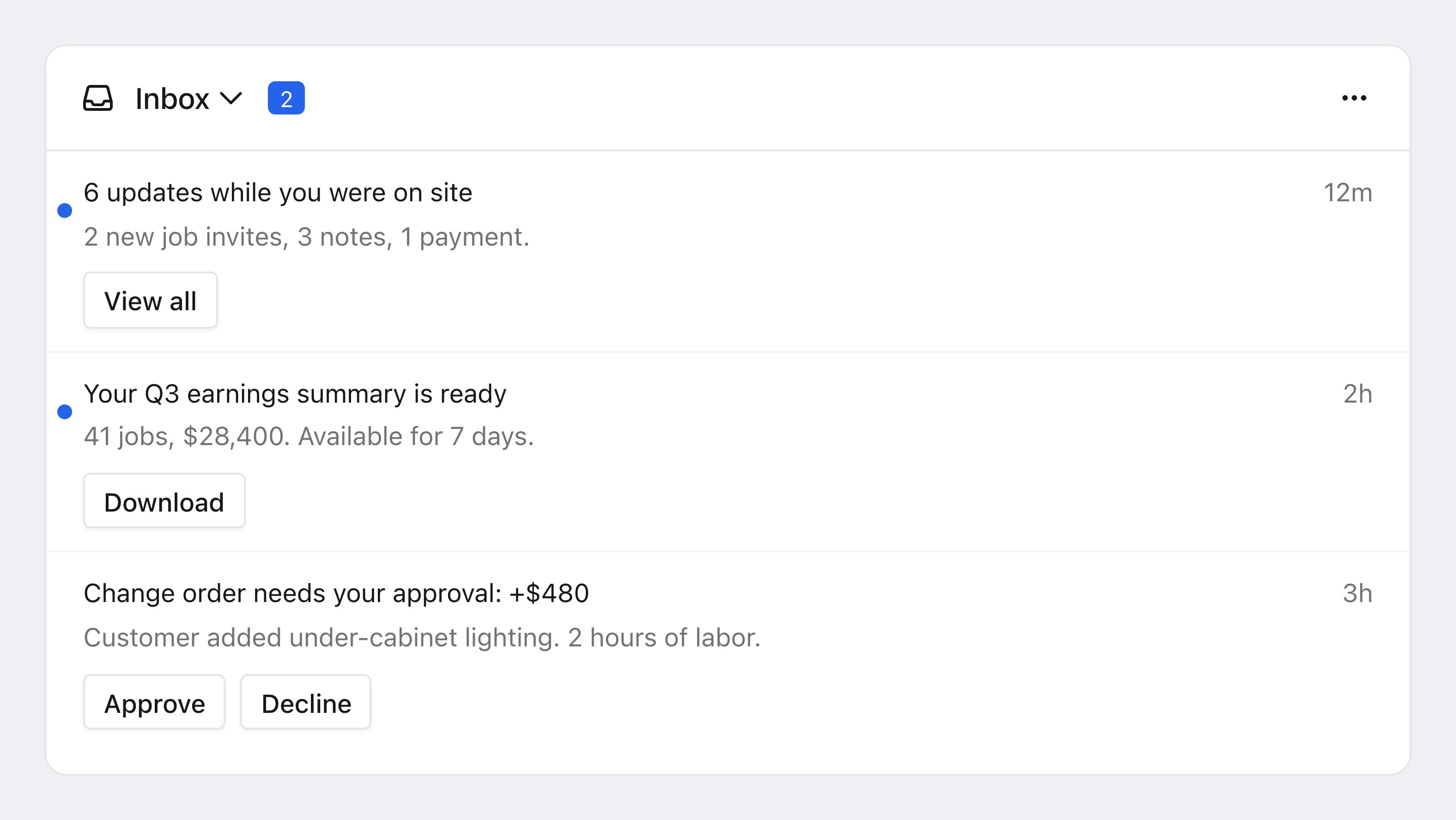
The Courier Inbox: unread indicators, relative timestamps, and per-message action buttons.
In-app renders inside your open app. Push is delivered by the operating system, so it arrives when your app is closed. They are separate channels, and one message can send to both. Set up push notifications covers the push side.
Choose your SDK
Install the SDK for your platform. Web Components work with any framework, or none.@trycourier/react-inbox, react-provider, and the components bundle are deprecated. See the courier-react v8 migration guide to move to @trycourier/courier-react or @trycourier/courier-ui-inbox.signIn, then render the inbox.
Want a working app first? The quickstarts for React, Next.js, and Astro build the token route, the inbox, and a test send, each with a repo to clone.
FAQ
What is the difference between Inbox and Toasts?
What is the difference between Inbox and Toasts?
Inbox is the persistent notification center listing a user’s messages. Toasts are transient popups that appear when a new message arrives, synced to the same feed. Both use the same
signIn, and each has its own theme. See Add toasts.Which frameworks and platforms are supported?
Which frameworks and platforms are supported?
React, React 17, Vue, Angular, Web Components (any framework or none), iOS, Android, Flutter, and React Native. See the table above for the package name per platform.
How do I authenticate users?
How do I authenticate users?
Your backend generates a JWT with your Courier API key and passes it to the client, which calls
signIn({ userId, jwt }). See Authenticate users for the full flow and scope strings.Can I send to the inbox and other channels at the same time?
Can I send to the inbox and other channels at the same time?
Add
inbox alongside other channels in your message’s routing. Courier delivers to each channel by your routing rules. When a template sends to both email and the inbox, opening the email marks the inbox message read. That uses the email’s tracking pixel, so it needs open tracking on. See Send to the inbox.