Sending Notifications via Microsoft Teams
 Aydrian HowardOctober 14, 2020
Check out the video below to watch us:
- Update our existing Courier Live Alert notification to include Microsoft Teams
- Create a bot in Microsoft Azure
- Connect that bot to the Courier Microsoft Teams Integration
- Attempt to send to a channel and a user
Be sure to Like the video and Subscribe to our YouTube channel.
A Delayed Partial Victory
Unfortunately, Tony and I were not successful in sending a message during this stream, but we were correct as to why sending to a channel was not working. The bot we created had not been added to any of the channels in our Microsoft Teams instance.
I decided to start again from scratch with a new bot. After a few Google search, I came across the Beginners Guide to MS Teams Development #2: Bots guide by Tomomi Imura. I used this to create my bot using App Studio available inside the Microsoft Teams client. I recommend checking out the post if you are looking to get started working with Microsoft Bots.
After creating the Reverse Bot from the post and seeing it work, I added the Team scope and found the option to add my bot to a channel in a team. In App Studio, when you click Install in the Test and distribute section, you can click the dropdown arrow on the Add button and select Add to a team. This will prompt you to select a team and channel to install the bot to.
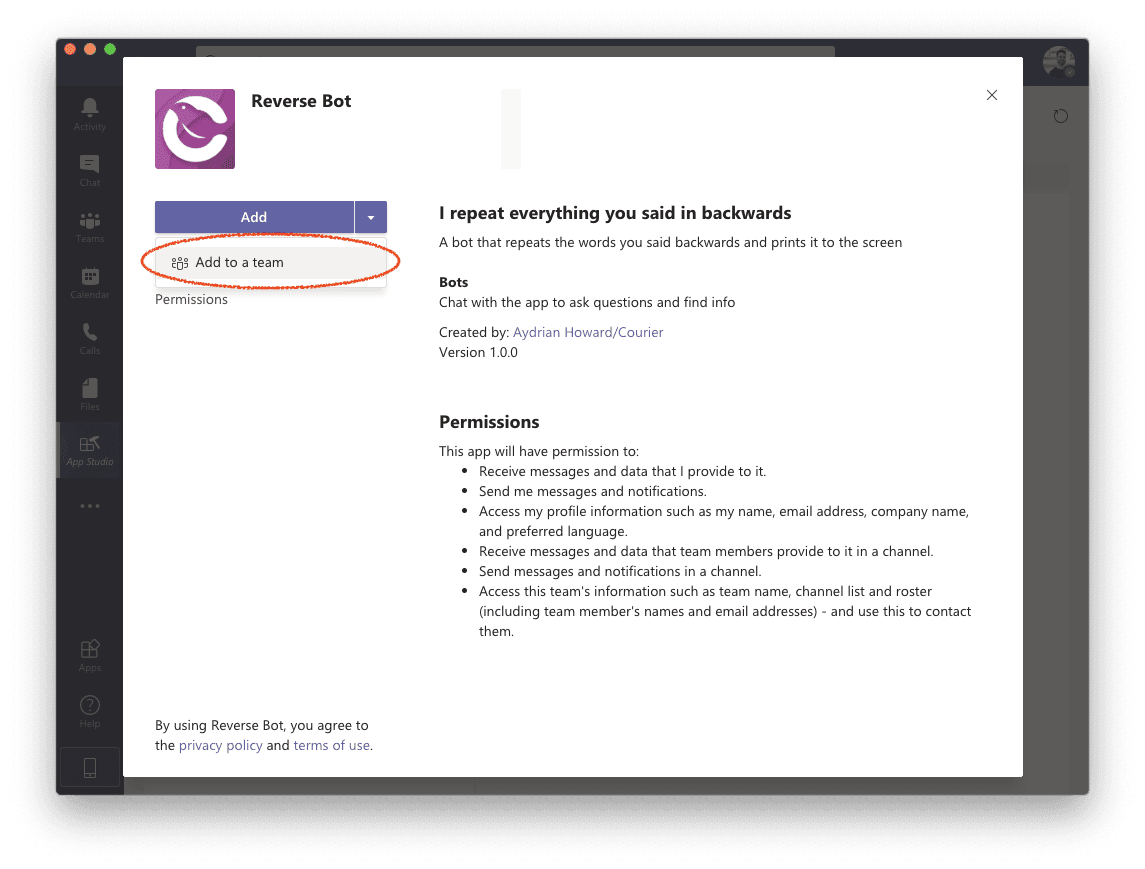
Once I had done that, I was able to use the methods Tony walked me through on the stream to locate the channel_id and successfully send the message to that channel.
I'm still working on successfully sending a proactive message to a user. I believe we were close and just have to find the correct user_id. I'm going to continue working on it and will include any solution in a follow up post.
To learn more about our Microsoft Teams integration, check out our integration docs.
Is there something you’d like to see us do using Courier? Let us know and it might be the subject of our next Courier Live. We stream a new Courier Live every Wednesday at noon Pacific. Follow us on Twitch to be notified when we go live.
-Aydrian
Similar resources

Clinical alert and notification systems: how escalation works
A clinical alert is easy to send and hard to close. This is how alerting works inside a hospital: where alerts come from, how routing by role and shift works, and how the acknowledge, timeout, escalate loop is actually built, including what happens when nobody answers.
How to send Slack notifications from your app
Slack is where your customers already work, which makes it a product surface rather than only an internal alerting channel. Posting an approval request or a status change into a customer's own Slack means working in workspaces you don't own, addressing people by email rather than Slack ID, and holding a separate credential for every customer.
How Product Teams Build, Test and Ship Multichannel Notifications in Design Studio
Product teams need to build, test, and ship notifications across multiple channels without filing an engineering ticket every time. Courier's Design Studio is the workspace for that: a template builder, visual channel routing, omnichannel testing, and publishing in one place. This post walks through the traditional template designer paradigm, how it splits effort across too many tools, and outlines a path for product and growth teams to ship transactional, product, and marketing notifications from a single workspace.