When AI Needs to Talk
 Kyle SeylerAugust 26, 2025
AI agents are changing how work gets done. But they're also creating communication challenges that many teams aren't prepared for.
The Discovery That Almost Stayed Hidden

In 2020, researchers at MIT and the Broad Institute made a breakthrough using artificial intelligence to discover new antibiotics. Their deep learning model, trained on molecular structures, identified a compound they named halicin. This became the first antibiotic discovered using AI that proved effective against drug-resistant bacteria in laboratory tests.
But here's what the headlines missed: the AI had actually flagged halicin months earlier, buried in a dataset of over 100 million molecular structures. The compound sat in computational results until researchers had time to manually review and prioritize the findings. The delay between AI insight and human action, while ultimately successful, highlighted a growing challenge as AI systems become more autonomous.
This pattern is becoming common across industries: AI agents generate valuable insights faster than humans can process them.
Your New Digital Colleagues
Most professionals have started using AI tools, but we're entering a new phase. McKinsey projects generative AI could add $4.4 trillion annually to the global economy, much of it through autonomous agents that work independently rather than just responding to prompts.
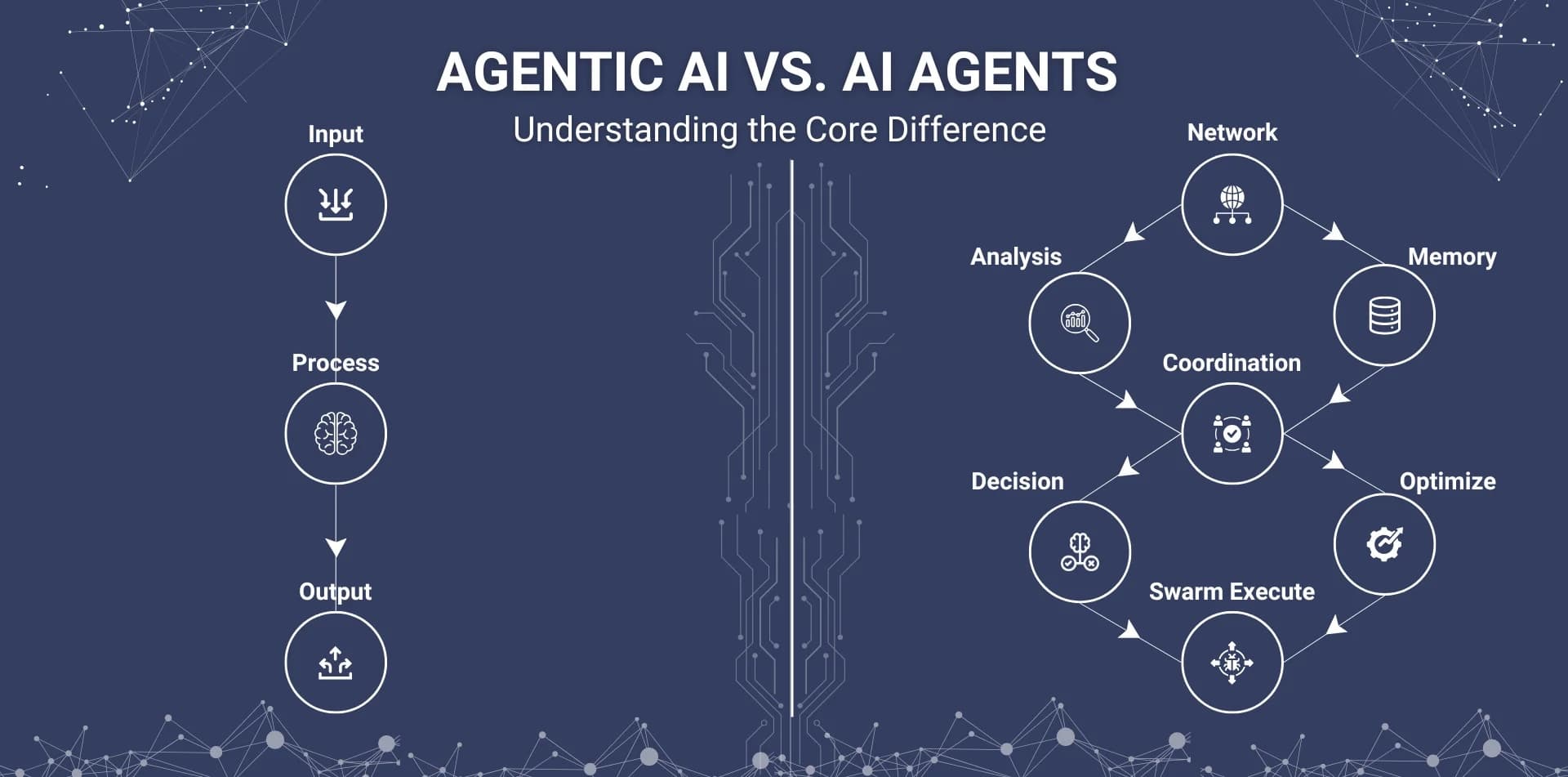
These agents differ fundamentally from traditional software. Instead of waiting for commands, they're continuously active, analyzing data overnight, monitoring systems during meetings, and surfacing insights at unpredictable moments. They're less like applications and more like digital colleagues who never take breaks.
And like any colleague, they need ways to communicate their findings, request approvals, and coordinate work.
The Manager's New Reality
As AI agents become more capable, professionals find themselves in an unexpected role: managing digital team members. This creates communication challenges that most teams haven't anticipated:
- Your coding agent completes security patches but needs deployment approval
- Your research agent finishes a multi-day analysis with actionable findings
- Your monitoring agent detects anomalies that might require immediate attention
- Your document assistant identifies conflicting information that needs clarification
Each represents different communication needs. Some are urgent, some contextual, some requiring simple acknowledgment, others needing complex decision-making. But traditional notification systems treat them all the same.
When Valuable Becomes Overwhelming
The challenge isn't that AI agents produce poor insights—it's that they often produce too many good ones. Without proper filtering and routing, valuable discoveries get lost in noise. Teams develop notification fatigue and start ignoring agent outputs, turning sophisticated AI into expensive shelf-ware.
This isn't primarily a training issue or change management problem. It's an infrastructure gap. Most notification systems were designed for predictable, human-generated alerts, not the continuous, probabilistic outputs of AI agents.
Three Communication Patterns That Break
Based on observing teams deploy AI agents, three scenarios consistently cause problems:
1. The Approval Bottleneck When AI agents need human sign-off—for code changes, budget approvals, or content edits—they often lack escalation mechanisms. The agent sends a notification and waits, with no way to convey urgency or follow up if the human doesn't respond promptly.
2. The Background Discovery Problem AI agents excel at long-running analysis, but when they surface critical findings, these often land alongside routine status updates. Without proper prioritization, important discoveries get overlooked until it's too late to act on them effectively.
3. The Context Gap The most valuable AI applications provide real-time assistance as humans work. But this requires nuanced communication—knowing when to interrupt with urgent information versus quietly accumulating insights for later review. Many teams struggle to establish these boundaries.
The Build-Versus-Buy Decision
When deploying AI agents, teams face a choice about communication infrastructure:
Building custom notification systems initially seems straightforward, but the requirements grow complex quickly.
Note:Read HiPages' build testimonial
Teams need smart routing based on content and urgency, stateful workflows that maintain context across multi-step processes, escalation handling for unacknowledged alerts, and rich formatting for complex AI outputs.
The alternative is treating notification infrastructure as a platform capability—something that can be configured rather than built from scratch.
What Effective Agent Communication Requires
After years of building notification infrastructure, we've identified key capabilities that AI agent communication demands:
Intelligent Routing Agents need infrastructure that understands context—routing financial alerts to the CFO via SMS while sending technical updates to the development team in Slack, accounting for time zones and escalation paths.
Stateful Workflows Agent tasks aren't instant messages but ongoing processes. The communication layer needs to maintain context across entire workflows, not treat each notification as isolated.
Confidence-Based Handling Different combinations of confidence levels and potential impact require different response patterns. High-confidence routine updates can be batched, while low-confidence high-impact findings need immediate human review.
Rich Content Support Agent outputs include analyses, visualizations, and structured recommendations. Reducing these to plain text notifications destroys much of their value.
Courier's Role in Agent Communication
We didn't originally build Courier for AI agents—we built it to solve notification complexity at scale. But as companies deploy more AI agents, they're discovering that capabilities we developed for traditional notifications become essential for agent communication.
Our webhook triggers enable connecting external systems to trigger automations based on events, which works well for agent-generated events. Our automation platform supports workflows for scheduling, canceling, sequencing, and customizing notifications, providing the stateful processes that agent communication often requires.
The routing intelligence, rich formatting, and workflow capabilities we built for traditional use cases translate directly to managing communication from AI agents. While we don't currently have customers using Courier specifically for AI agents, the infrastructure requirements are remarkably similar to the complex notification challenges we already solve.
A More Measured Approach
We don't believe notification infrastructure is the primary barrier to AI adoption, nor do we think it's the most important technical challenge teams face. AI agents have fundamental limitations and capabilities that matter far more than how they communicate.
But for teams that have deployed effective AI agents, communication infrastructure often becomes a practical bottleneck. The agents work well, but the humans managing them struggle with information overload and context switching.
This is a solvable problem, and it's one where existing solutions can help. Teams don't need to build custom notification systems from scratch—they can leverage platforms designed for complex, event-driven communication.
Looking Forward
As AI agents become more autonomous and valuable, the teams that use them effectively will be those who've solved the practical challenges of agent-human collaboration. Communication infrastructure is one piece of this puzzle—not the most important piece, but an essential one.
The technology exists to handle agent communication well. The question is whether teams will recognize it as a platform problem rather than a custom development challenge.
Courier provides event-driven notification infrastructure that can support AI agent communication patterns. Our webhook triggers and automation workflows handle the complex routing and stateful processes that agent communication often requires. Start free or talk to a sales engineer to discuss your notification infrastructure needs.
Similar resources

WhatsApp pricing changes on October 1, 2026
On October 1, 2026, two things become billable on the WhatsApp Business Platform: free-form replies inside the 24-hour customer service window, and utility templates sent in response to a customer. If your WhatsApp volume is conversations rather than campaigns, this is not a rate tweak. It adds a line to your invoice where there used to be a zero. Here is what changes, a worked example of the cost, and what to check.

Clinical alert and notification systems: how escalation works
A clinical alert is easy to send and hard to close. This is how alerting works inside a hospital: where alerts come from, how routing by role and shift works, and how the acknowledge, timeout, escalate loop is actually built, including what happens when nobody answers.

Courier vs Customer.io: 2026 messaging platform comparison
Courier and Customer.io both send across email, push, SMS, and in-app, but they are not priced or built the same way. Courier bills by the send, puts journeys, experiments, broadcasts, an in-app inbox, preferences, and 50+ delivery providers on one platform, and exposes all of it through an API, a CLI, and an MCP server. Customer.io bills by the number of profiles in your database and fits a marketing team that needs deep behavioral segmentation. This comparison covers pricing, journeys, channels, in-app messaging, localization, and preferences, with every competitor figure linked to Customer.io's own pages.