How to White Label Email Notifications for Multiple Brands
 Riley NapierDecember 15, 2020
Whitelabeling emails is the process of transforming your emails, so that they look like they're coming from another brand. Imagine, for example, that you're an employee management platform that sends engagement surveys, check in-reminders, and other alerts on behalf of your customers. You and your customers will likely want those email notifications to match the employer's brand, not yours.
But, if you've ever had to whitelabel emails before, you know it can be a real headache. At an e-commerce platform where I worked previously, our customer service team would contact our clients one by one to get their logo and other assets and use a custom dashboard to upload each brand into our system. Then, on the engineering side, we'd write custom logic for our templates with conditionals for the different brands, pulling the brand IDs from our CMS. And, in some cases, we'd even write a hardcoded template for a specific brand.
That's precisely why we built Brands at Courier. Brands makes it easy to send whitelabeled notifications that match your customers' brands or, if you have multiple properties, your own sub-brands. As a developer, you can also create, update, and delete Brands programmatically with our Brands API, which saves a ton of time and effort.
In this post, I'll explain how you can create and send whitelabeled email notifications using Courier's Brands feature.
Whitelabeling your email notifications in Courier
Creating multiple brands
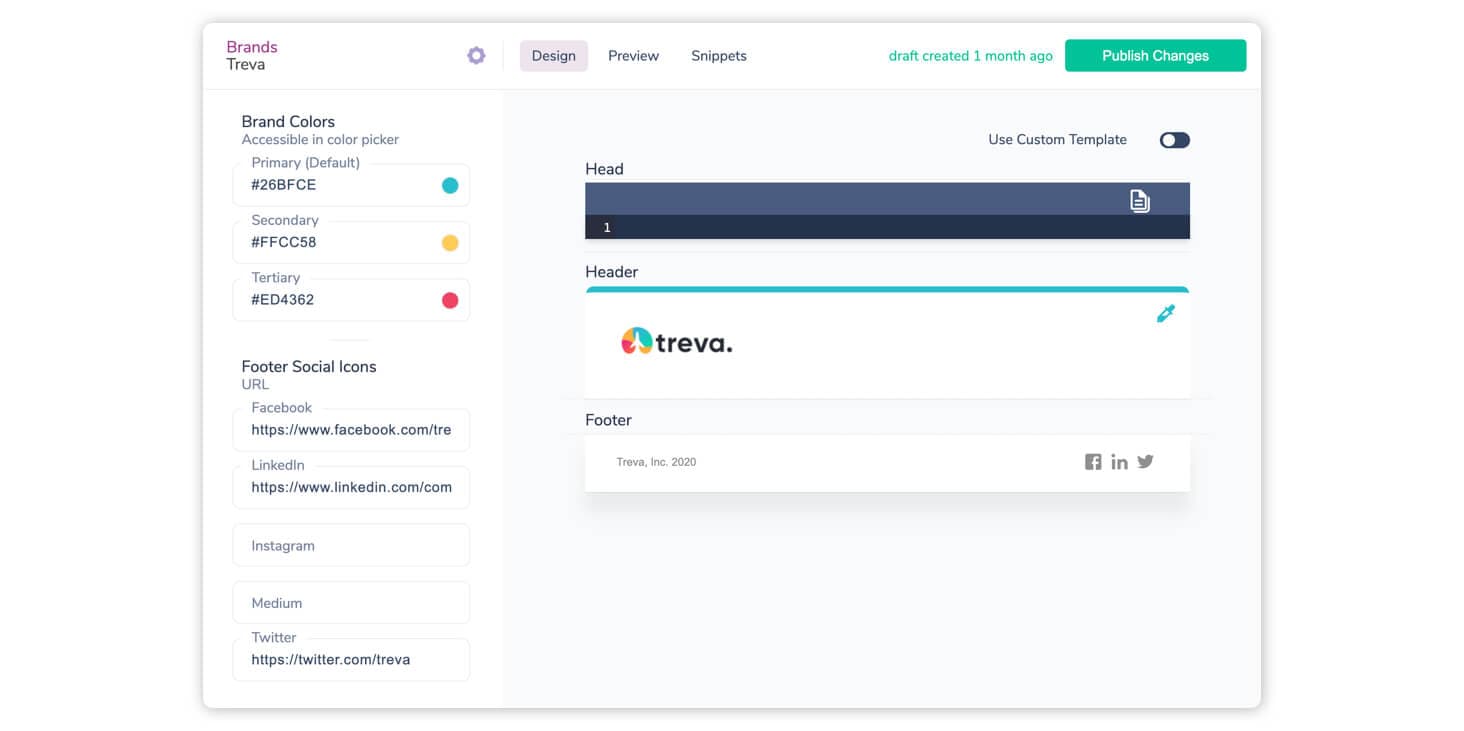
You can quickly create new brands through our UI or programmatically with our Brands API. When you create a new Brand, you have the option to configure the brand colors, the header and footer, and any social media links. You can even add custom CSS to the header, footer, and head section to have it fully match your customers' brands or your sub-brands.
Creating custom, reusable code with Snippets
You can extend the Brands you create in Courier with Snippets. Snippets are pieces of code that you can reference in the templates for your notifications. Returning to our earlier example, if you were an employee management platform, you might create a Snippet for each of your customers' brands that includes their mission statement. Now, instead of copy-pasting across each template, you can simply call the Snippet by name.
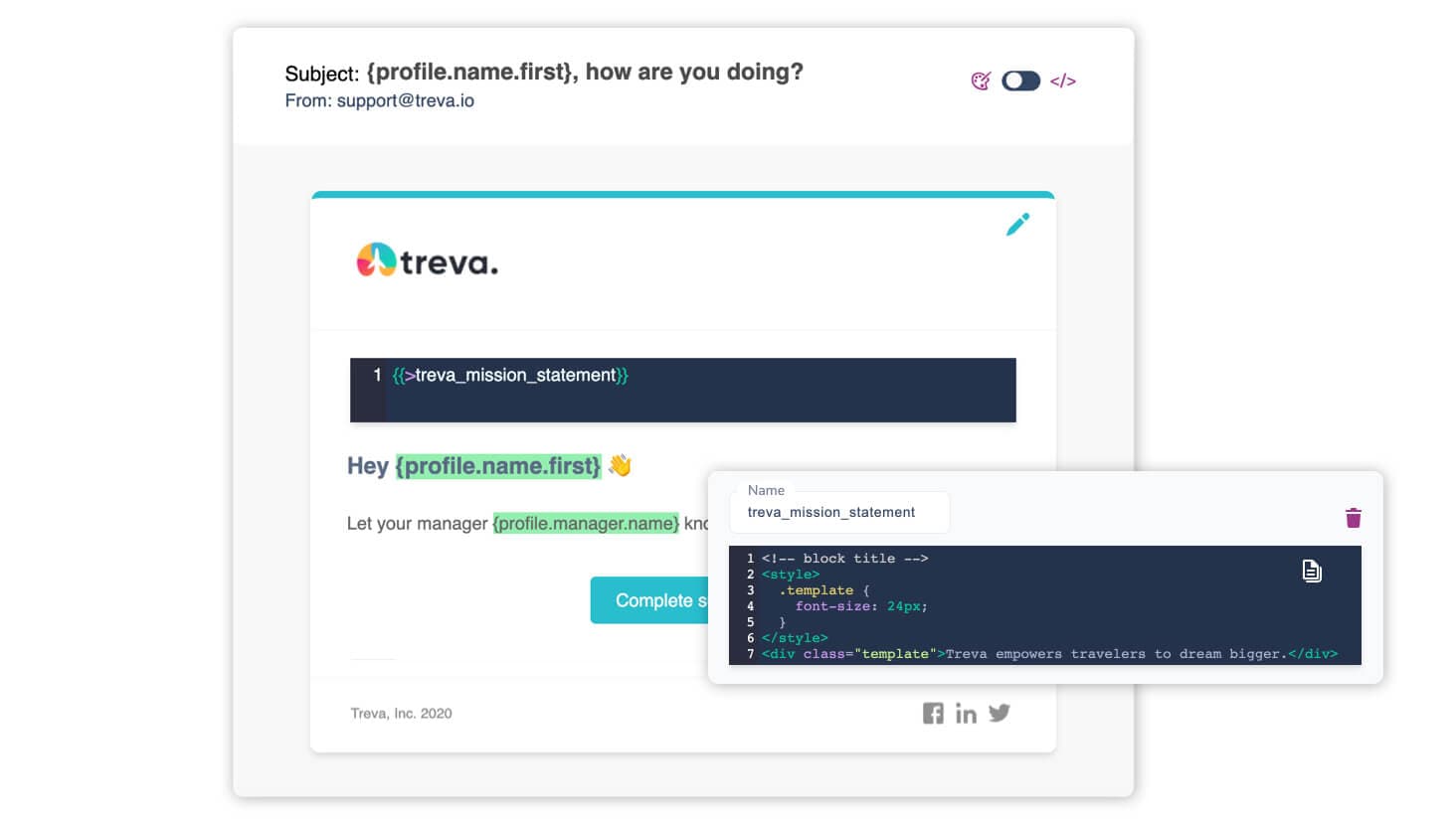
You can also use variables to customize your Snippet. You could, for instance, create a variable for your customers' mission statements. Then, you could reuse one template across all your Brands. When you send your notification, all you would have to do is include the correct Brand ID and supply the right value for the variable in your API call to Courier.
Like everything else about Brands, Snippets can be managed programmatically with our Brands API or customized in the UI.
Sending whitelabeled emails using Brands
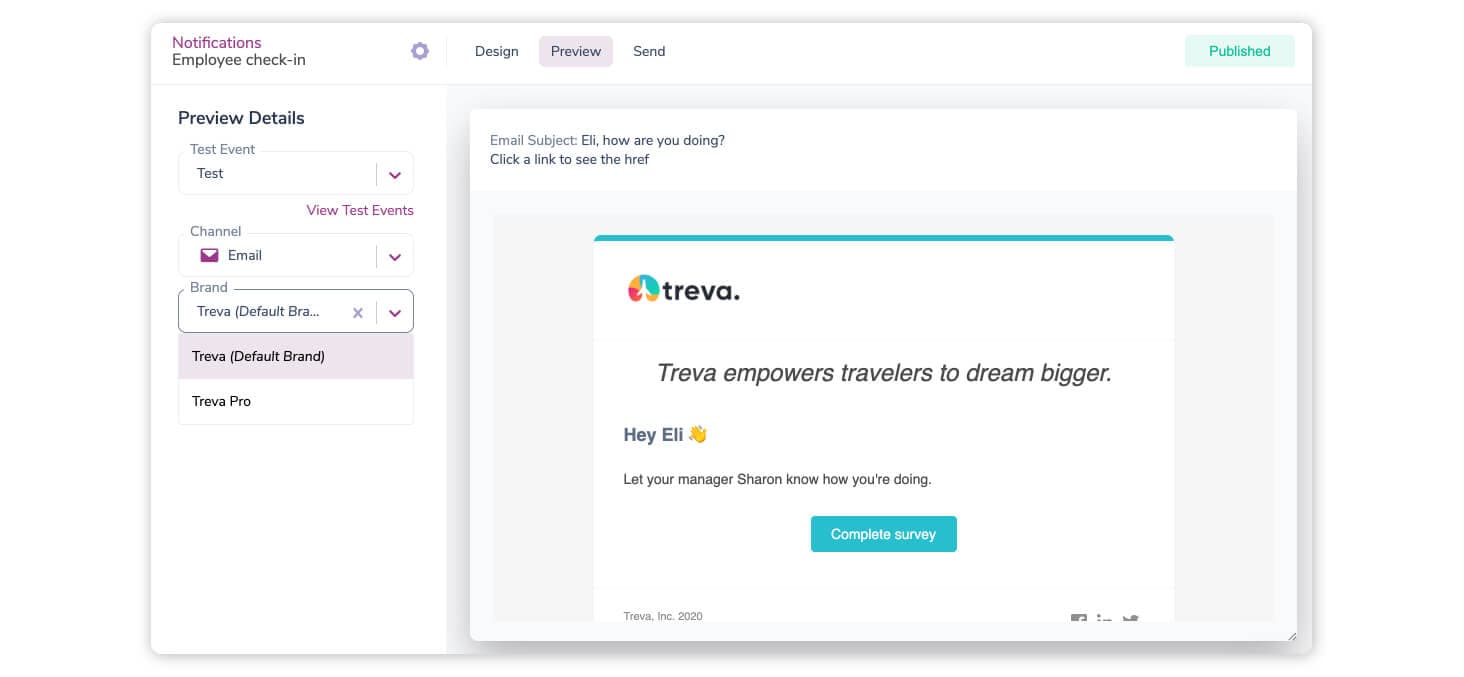
Once you've set up your Brands, sending whitelabeled email notifications is super straightforward. You can either choose a specific Brand in the UI or you can set the Brand programmatically by including the Brand ID in your API call to Courier.
Get started with Brands
Ready to get started with Brands? Sign up for free – you can create up to 10 Brands and send up to 10,000 notifications free every month.
If you want to learn more about Brands, check out our livestream where Aydrian, our Staff Developer Advocate, walks you through how to create and send a notification with multiple Brands using the Courier API and Python SDK. You can also find additional code samples on Github – we offer libraries for Python, Ruby, Node, Go, and PHP.
Curious how we built Brands? Stay tuned for a look under the hood!
Similar resources
Know the moment users change notification preferences
Every preference change in Courier now reaches your systems two ways. A `preferences:user:updated` webhook fires the moment a user opts in, opts out, or changes a topic's channels, wherever they made the change. `GET /preferences/logs` returns the history, newest first, with the previous value where Courier knows it. Keep your CRM, warehouse, or marketing tools in step with what users chose.

Test Courier emails end to end with your AI agent
Give your coding agent an AgentMail inbox, and it can test your Courier emails the way a user would: send the change, check what arrives, review how it renders, and fix what it finds before the change reaches Production.
Let your agent check every email before it ships
Courier Device Preview gives your coding agent real screenshots from Outlook, Gmail, and Apple Mail. Here's the prompt and workflow to have it check every email, fix the draft, and check again before you publish.