The First 48 Hours: Onboarding Notifications That Keep Users Around
 Kyle SeylerFebruary 02, 2026
The First 48 Hours: Onboarding Notifications That Keep Users Around
TLDR
60% of app uninstalls happen in the first week. The first 48 hours are when users decide if you're worth their attention. Most teams send too many notifications too fast and train users to ignore them before they've even tried the product. The fix: fewer notifications, each one timed to what the user just did or clearly needs next. The goal isn't to show everything your product does. It's to get users to one moment of value.
Why the first 48 hours matter more than everything after
Users don't slowly lose interest. They decide quickly, then drift away.
The data is consistent across product categories:
- 60% of app uninstalls happen within the first week
- 25% of users who churn do so after a single session
- Users who don't hit a key activation milestone in the first 48 hours are 3-5x more likely to churn
Your onboarding notifications are either helping users reach value or getting in the way. There's no neutral.
The first notification you send is an audition. Users are deciding whether your notifications are worth their attention. If you waste that first impression on generic content, you've trained them to ignore everything that follows.
The most common mistake: sending too much too fast
Here's a typical first-48-hours sequence that doesn't work:
| Time | Notification | Problem |
|---|---|---|
| 0 min | Welcome email | Fine, but essay-length |
| 30 min | "Did you know?" feature tip | They haven't used the first feature yet |
| 2 hours | "Complete your profile" prompt | Interrupts users who are exploring |
| 6 hours | CEO founder letter | Nobody asked for this |
| 24 hours | "You haven't logged in" nudge | It's been one day |
| 36 hours | "5 things you can do" digest | They haven't done one thing |
By hour 36, you've sent 6 notifications to someone who may not have completed a single meaningful action.
What this trains users to do: Ignore you. Archive without reading. Turn off notifications. Unsubscribe.
You've optimized for sending. You should optimize for receiving.
A better framework: react, don't broadcast
The best onboarding notifications respond to what users do, not to arbitrary timers.
Broadcast approach (common, ineffective): > Day 1: Send welcome email > Day 2: Send feature guide > Day 3: Send social proof > Day 4: Send usage tip > ...
Reactive approach (less common, more effective): > User signs up → Send confirmation with one clear next step > User completes setup → Send "what's next" based on their choices > User starts first project → Don't interrupt > User finishes first project → Send relevant next step > User goes quiet for 48 hours → Send re-engagement with specific hook
The reactive approach sends fewer notifications but each one is relevant to where the user actually is.
The first 48 hours, mapped
Hour 0: Confirm, don't sell
They just signed up. They know what you do. They don't need a product tour in email form.
What to send:
- Confirmation that their account is ready
- One clear next step (not five)
- How to get help if they need it
What not to send:
- Your company's origin story
- A list of all features
- Social proof (they already signed up)
- Multiple CTAs competing for attention
Example:
Subject: You're in
Your [Product] account is ready.
Your next step: [One specific action that leads to value]
Questions? Reply to this email or visit [help link].
That's it. Short. Clear. Actionable. One check before it ships: the Gmail app cuts subjects around 35 characters, so look at the subject and preview text the way a phone will show them.
Hours 1-4: Watch and respond
This is when engaged users are exploring your product. The worst thing you can do is interrupt them.
If they're actively using the product: Don't send anything. Let them explore.
If they've completed a key action: Send a brief acknowledgment with the next step.
If they've hit a wall: Send help. "Looks like you started X but didn't finish. Here's how to complete it."
The trigger pattern:
on_event("completed_setup"):if time_since_signup < 4_hours:send("Here's what most users do next...")on_event("started_but_abandoned"):if abandoned_for > 30_minutes:send("Need help finishing?")
This requires event tracking. You need to know what users are doing to respond intelligently.
Hours 4-24: One valuable thing
You have one chance to send a proactive notification in this window. Make it count.
Pick the single most important activation milestone for your product. For a project management tool, maybe it's inviting a teammate. For a design tool, maybe it's completing the first design. For a data tool, maybe it's connecting a data source.
Send one notification that helps users reach that milestone.
What this notification needs:
- Clear connection to value (why this matters)
- Simple next step (how to do it)
- No additional asks (don't dilute with other CTAs)
Example:
Subject: Projects are better with your team
You created your first project. Nice.
Teams that invite collaborators in the first week are 3x more likely to stick with [Product].
[Invite your team] (takes 30 seconds)
One ask. One action. One goal.
Hours 24-48: Social proof or support
By now, users have either engaged meaningfully or they're at risk.
For engaged users: Reduce anxiety about their choice.
"Teams like yours use [Product] to [specific outcome]. Here's how [similar company] got started."
For users who haven't activated: Remove friction.
"Need help getting started? Here's the most common question new users have: [answer]. Or reply to this email and we'll help directly."
Don't send the same thing to both groups. Users who've already invested time need different support than users who are stuck.
Timing: what the data says
| Notification Type | Best Timing | Why |
|---|---|---|
| Signup confirmation | Immediate | Users expect it, confirms action worked |
| First next-step | 0-10 minutes | While they're still engaged |
| Progress acknowledgment | Immediately after key action | Reinforces behavior |
| Re-engagement | 24-48 hours after last activity | Not too eager, not too late |
| Onboarding completion | After they've hit key milestone | Celebrates actual progress |
What the data doesn't say: There's no universal "best time" for onboarding notifications. The best time is relative to user behavior, not the clock.
Sending your "day 2" email at exactly 48 hours regardless of what the user has done is lazy. Some users are highly engaged at hour 48. Some have never returned. Same message for both?
The anti-patterns
Don't interrupt progress
User is actively using your product. They're clicking around, making things, exploring features.
Do not send them a push notification while they're doing this.
❌ "Did you know you can invite teammates?" (sent while user is mid-task)
Wait until they pause. Or wait until they leave. Don't compete with yourself for their attention.
Don't stack messages
Sending 4 notifications in 48 hours feels desperate. Even if each one is good.
Space them out. If you absolutely need to send multiple things, batch them into a single notification where possible.
Don't send generic tips
❌ "Here are 5 things you can do with [Product]!"
This is lazy. If you know they're in hour 24, you probably know what they have and haven't done. Send tips relevant to their actual usage.
✅ "You created a project but haven't added any tasks yet. Here's how task management works."
Don't assume everyone's the same
Power users and casual explorers need different onboarding. If possible, adjust your sequence based on early behavior signals.
Light engagement + no activation → needs more help Heavy engagement + quick activation → might want advanced features No engagement at all → might need a different hook
The one metric that matters
Open rate tells you if people read your notification.
Click rate tells you if people tapped a button.
Activation rate tells you if your notifications actually worked.
Measure this: Of users who received onboarding notification X, what percentage reached activation milestone Y within Z days?
If your notifications have great open rates but don't move activation, they're not working. You're sending engaging content that doesn't help users succeed.
The fix is usually one of:
- The CTA doesn't connect to activation
- The timing is wrong (too early, too late, or interrupting)
- The content doesn't address what's actually blocking users
Example sequences
Minimal sequence (3 notifications)
| Trigger | Notification | Goal |
|---|---|---|
| Signup | Welcome + one next step | Confirm, direct |
| First key action | Acknowledgment + next step | Reinforce, progress |
| 48h inactive | Re-engagement with specific hook | Recover |
This is the minimum viable onboarding. If you're not sure what to send, start here.
Behavior-based sequence
| Trigger | Notification |
|---|---|
| Signup | Welcome + primary action prompt |
| Primary action completed | Next milestone prompt |
| Primary action started but not completed (30m wait) | Help prompt |
| 24h with primary action complete | Social proof + advanced tip |
| 24h without primary action | Re-engagement focused on primary action |
| 48h still no primary action | Different angle or offer help |
This requires more infrastructure (event tracking, branching logic) but performs significantly better.
Implementation checklist
Before you build:
- Define your activation milestone (the one action that correlates with retention)
- Map your current onboarding sequence against actual user behavior data
- Identify where users get stuck or drop off
What to build:
- Event tracking for key user actions
- Trigger-based notification logic (not just time-based)
- Segmentation for engaged vs. disengaged users
- Holdout group to measure impact
What to measure:
- Activation rate by notification received
- Time to activation by sequence
- Unsubscribe/notification-disable rate in first week
- Day 7 and Day 30 retention by onboarding path
The bottom line
The first 48 hours are when users decide if your notifications are worth their attention. Every message is an audition.
Most teams fail this audition by sending too much too fast, because it's easier to broadcast than to respond.
The teams that get onboarding right send fewer notifications, each one timed to what the user just did or clearly needs next. They don't try to show everything the product can do. They focus on getting users to one moment of value.
If you take nothing else from this: your welcome email is not a product tour. Your onboarding sequence is not a content calendar. Every notification should help users reach value faster.
The goal isn't to inform them. It's to help them succeed.
This post is part of The Ping, a series about building notifications that don't get ignored.
Similar resources
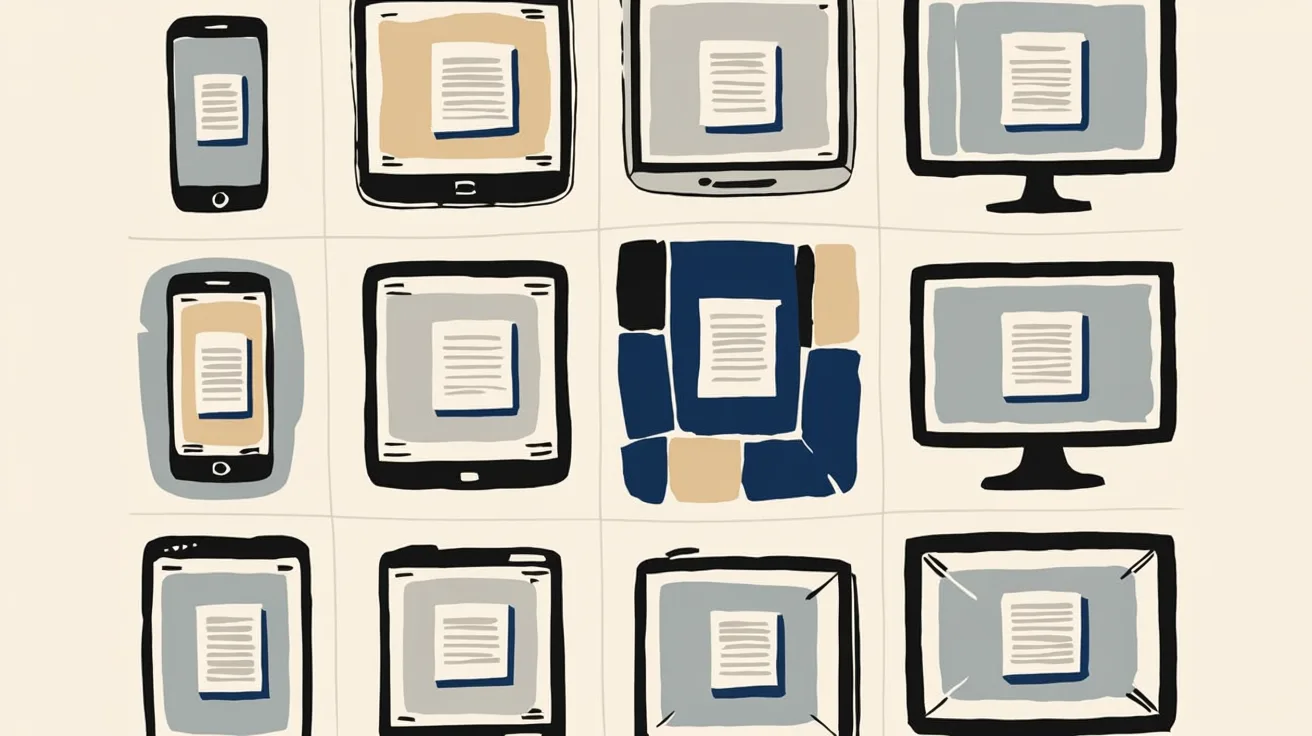
Introducing Cross-Device Email Preview: see your email on real devices before you send
Cross-Device Email Preview renders your template on the real clients you pick, from Outlook on Windows to dark mode on iPhone, and returns a screenshot of each one. Pick from 96 clients across 21 apps without leaving Design Studio.
New settings page, easier to use, with new background colors
Courier settings has been redesigned. Workspace pages and developer pages are grouped separately, every page says what it's for, and the app now comes in light or dark with nine background colors.
How to send messages and not piss off your customers
Every notification looks reasonable in isolation. Your customers don't experience them one at a time, they experience all of them before lunch. Here's why sending less beats sending more.