AI Tools for Product Managers: The Modern PM Stack
 Kyle SeylerApril 28, 2026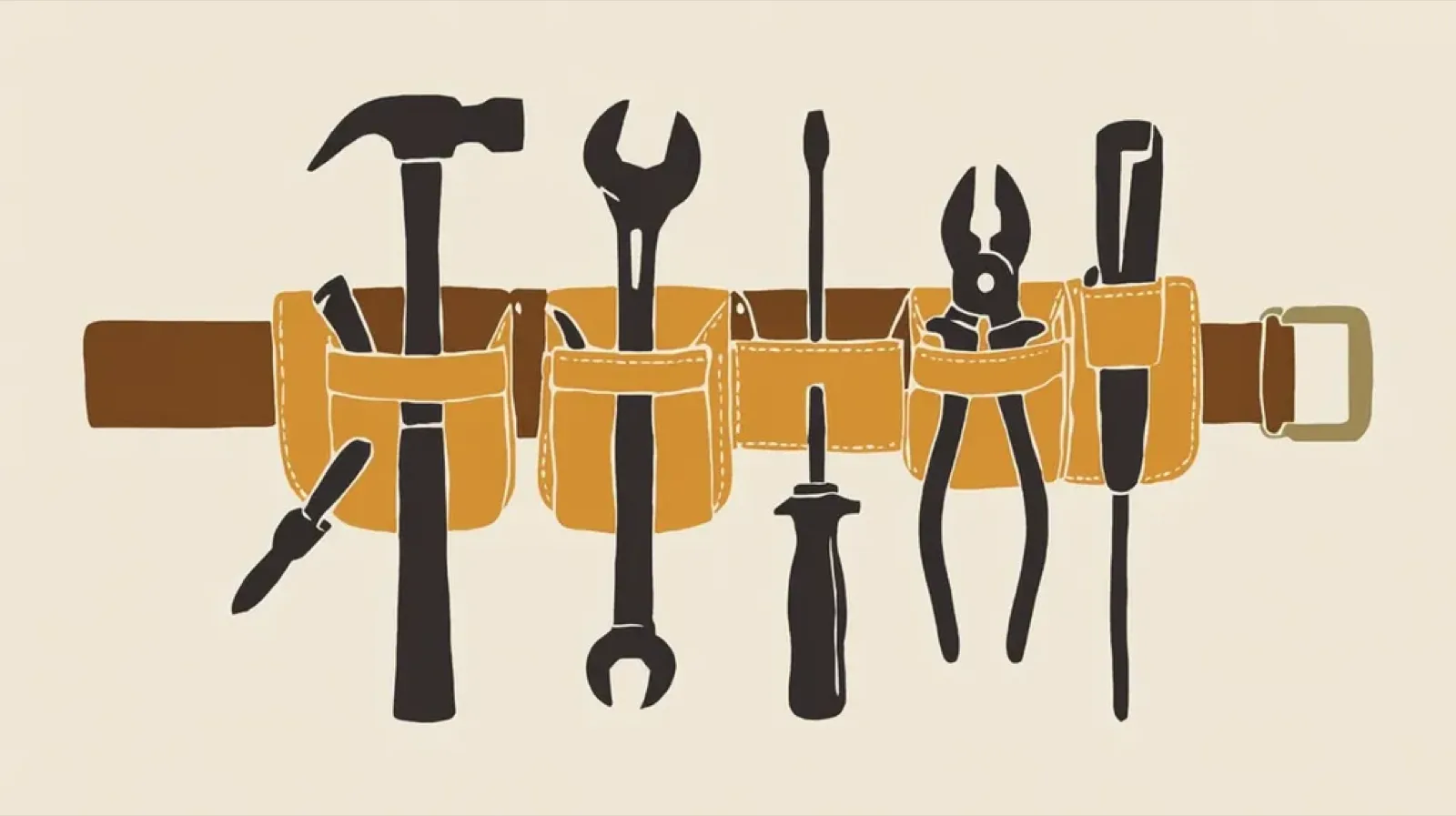
TLDR
The modern PM stack runs on AI at every step: Cursor and Claude Code for build, Pencil and Claude Design for prototyping, Courier for notifications and agent communication, Segment for routing product events and engagement data, PostHog for analytics and LLM evals, and a knowledge system like Notion for shared memory across humans and agents.
What changed
Four shifts in eighteen months.
Speed. A spec used to take a week, a prototype a sprint, a launch a full quarter, and AI has collapsed all three. Cat Wu, Head of Product for Claude Code at Anthropic, puts it this way:
"Exponentially improving models break that assumption. The constraints you designed around might disappear mid-project. You're building on ground that's rising underneath you, and teams need to reorganize around that reality. The new product management rhythm is rapid experimentation, consistent shipping, and doubling down on what works."
Responsibility expansion. PMs are doing more design, more copy, more engineering coordination, more analytics, because AI made it cheap to cross the lines that used to separate the disciplines. Wu describes the same pattern at Anthropic:
"Our roles are blending together: designers ship code, engineers make product decisions, product managers build prototypes and evals."
Outcomes over output. Feature counts stopped earning credit, and the question from leadership is now what moved: activation, retention, revenue, time to value.
Seeds over roadmap. Quarterly commitments stopped working. Teams plant bets, sense what's gaining traction within weeks, and double down on what hits. Jack Dorsey and Roelof Botha made the harsher version of this argument:
"The traditional road map, where product managers hypothesize about what to build next, is any company's ultimate limiting factor."
The modern PM is operating, not specifying. Anish Acharya at a16z put it plainly:
"There isn't any less ambiguity involved in bringing products to market and scaling them today, but the tools and opportunities are completely new. Product managers that ignore this dynamic risk irrelevance."
The stack has to match.
The stack
Cursor and Claude Code handle the build, and Claude and ChatGPT cover thinking and writing. Every PM blog already covers these, so the rest of this guide focuses on the parts of the stack that get less attention.
Design and prototyping: Pencil and Claude Design
Pencil takes a rough sketch and returns an AI-assisted layout your designer can finish, instead of starting from a blank file. Claude Design takes the same idea described in conversation and gives back a working interactive prototype. One produces the visual artifact, the other produces something you can click through.

Notifications: Courier
Notification timing, channel, and copy drive activation, retention, and reactivation. The first email after signup, the in-app nudge mid-session, the SMS when something actually matters: PMs move outcomes through these decisions, and historically every change required an engineering ticket.
Courier gives PMs direct control of the messaging layer, with AI-assisted message composition for any channel and visual journeys that span email, push, SMS, in-app, Slack, and Teams. Drop-in components handle inbox and preferences, and the BYOP model means you orchestrate on top of your existing providers instead of replacing them. Design Studio covers templates with AI for copy, and Journeys covers multi-step sequences with build, branch, throttle, and digest.
"We chose Courier because the depth of the inbox and multi-channel integrations allowed us to choose one notification platform for all products and teams at Twilio." — Raghav Katyal, Technical Lead, Twilio
LaunchDarkly uses Courier for feature release notifications, routing alerts into Slack to cut approval times (case study).
Agent communication: Courier
Your product ships AI agents that take actions on the user's behalf, which means users need to know what those agents did and the agents need to know how users responded. Sending a notification on every action trains users to ignore them within a week.
Courier handles the communication layer between agents and users. Batch nodes group events into time windows, throttle nodes cap how often a user gets pinged, and digests roll low-urgency events into scheduled summaries. Conditional routing sends an immediate push for the things that matter and queues the rest.
During build, Claude Code and Cursor call Courier's tools through MCP, which means a PM can describe a notification pattern in plain language and watch the coding agent implement and test it inline.
Customer data: Segment
Segment is the connective tissue. Product events flow in, get enriched, and route to wherever they need to act. The Courier and Segment integration sends product events into Courier as triggers and pushes notification engagement back into Segment as events. A user activates a feature, Segment notes it, and Courier sends a tailored follow-up. Whether the user opens it or not, that engagement flows back through Segment and the downstream tools adapt.

Analytics and evals: PostHog
PostHog covers product analytics, session replay, feature flags, and experiments. For PMs shipping AI features, the new piece is LLM analytics and evals. Evaluating model outputs is the new A/B test, where you run a prompt or model variant, measure it, iterate, and ship the better version. Putting evals next to product analytics lets the PM correlate model performance with actual user behavior.

Knowledge: Notion or similar
A PM working at AI speed can't have context locked in 47 Slack threads, 12 Google Docs, and a Notion nobody has organized since 2023. The knowledge system has to be queryable. Notion's AI is the obvious option, and custom setups with vector search over docs, Slack history, and decision logs work too. Two consumers matter: humans who need to find the rationale behind a six-month-old decision in twenty seconds, and agents that need persistent memory of how the team thinks.

The feedback loop
The tools above form a single loop. Ideas pull from the knowledge system and Claude, prototypes come together in Pencil and Claude Design, and Cursor and Claude Code handle the build. Engineering ships the product, Courier ships the messages, PostHog measures, and Segment routes the signal back into the knowledge system that started the cycle. PMs operating at the new pace have this loop closed, while the ones who don't are still writing specs in a Google Doc and waiting on engineering.
Where to start
Audit your stack against the loop. Most PMs find at least one gap: no design layer beyond Figma so every prototype waits on a designer, no control over the messaging layer so every copy change is an engineering ticket, no way to evaluate AI features post-launch, or no shared knowledge layer so context lives in three people's heads. Pick the biggest one and close it first.
If the gap is messaging, start with Courier. Ship a journey across two channels in an afternoon and watch engagement flow through Segment into PostHog and into the next iteration.
Similar resources

Courier vs Customer.io: 2026 messaging platform comparison
Courier and Customer.io both send across email, push, SMS, and in-app, but they are not priced or built the same way. Courier bills by the send, puts journeys, experiments, broadcasts, an in-app inbox, preferences, and 50+ delivery providers on one platform, and exposes all of it through an API, a CLI, and an MCP server. Customer.io bills by the number of profiles in your database and fits a marketing team that needs deep behavioral segmentation. This comparison covers pricing, journeys, channels, in-app messaging, localization, and preferences, with every competitor figure linked to Customer.io's own pages.
Your notification analytics are now available by API
If it's in the Courier dashboard, it's on the API. Analytics was one of the last screens where that wasn't true. GET /notifications/{id}/metrics returns sends, deliveries, opens, clicks, errors, and undeliverable counts per template as a time series, broken out by provider and channel, so the numbers can live in your own product or go straight to an agent.

Top 11 push notification platforms compared for 2026
Push starts as the whole job, then product wants an email fallback, legal wants a preference center, and support wants a searchable log. This guide compares 11 push notification platforms on channels, free tiers, and pricing, and shows why Courier's single API for push, email, SMS, in-app inbox, Slack, and Microsoft Teams fits that arc better than a push-only tool. Includes 2026 opt-in and open-rate benchmarks, a full-stack cost comparison, and what each platform leaves you to build.
© 2026 Courier. All rights reserved.