Courier + Stream: The Future of Customer Engagement is Here
 Kyle SeylerOctober 29, 2025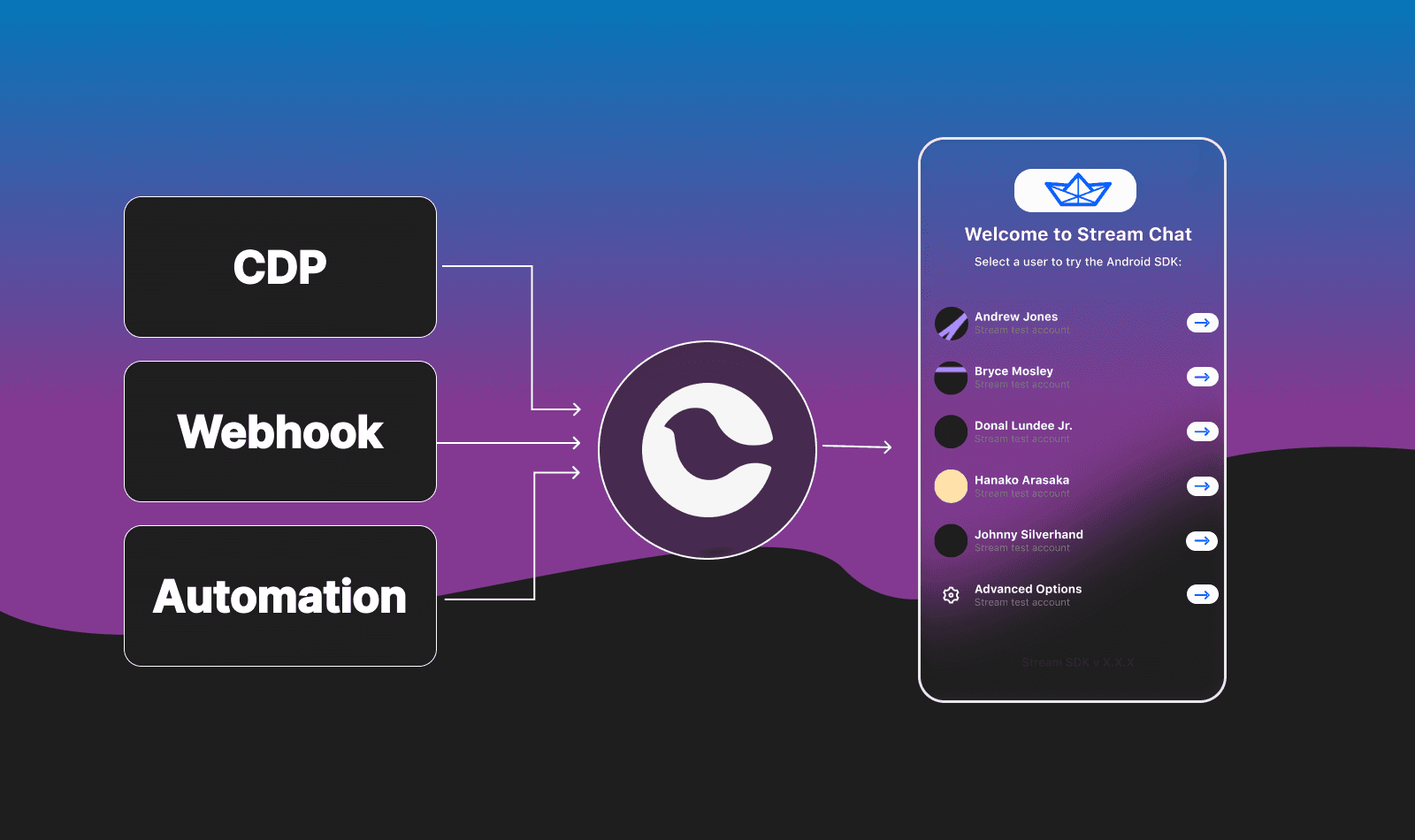
Modern applications need more than just features. They need conversations, connections, and intelligent communication that reaches users wherever they are. Courier's omnichannel notification platform combined with Stream's real-time messaging infrastructure creates a partnership that transforms how developers build engaging customer experiences.
The Shift Toward Conversational Products
Something fundamental has changed in how we build software. Applications are no longer static tools that users visit occasionally. They're becoming living spaces where people collaborate, communicate, and stay connected to what matters most.
Look at the products winning today's market. They don't just send emails or show alerts. They create rich, multi-dimensional communication experiences. A project management tool doesn't simply notify you that a task is complete. It lets you discuss the task in real-time chat, jump into a video call with teammates, see activity feeds of project updates, and receive notifications across email, SMS, and push based on urgency and preference.
This shift demands infrastructure that most teams don't have time to build. That's where Courier and Stream come together.
What Courier Brings: Smart Notification Orchestration
Courier handles the complexity of getting messages to users across every channel that matters. The platform integrates with 50+ notification providers, giving you a unified API that works across email (SendGrid, Mailgun, AWS SES), SMS (Twilio, MessageBird), mobile push notifications (Firebase, OneSignal), and workplace chat (Slack, Microsoft Teams).
But Courier's real power goes beyond channel variety. The platform provides adaptive channel selection that automatically chooses the best delivery method based on user preferences, message urgency, and delivery success rates. When a critical notification needs to reach someone, Courier can try push first, fall back to email after 30 seconds if undelivered, then escalate to SMS for truly urgent messages.
The platform includes built-in user preference management, so recipients control which notifications they receive and through which channels. This reduces notification fatigue while ensuring important messages get through. Engineers don't build preference centers from scratch. Product managers use visual designers to create notification templates without touching code. Workflow automations handle complex notification sequences. Analytics dashboards show delivery performance across every channel and provider.
Courier also provides its own in-app inbox component with real-time delivery over managed WebSocket infrastructure. Users get a persistent notification feed that syncs across web and mobile, with read/unread tracking that works across all channels. When someone opens an email notification, their inbox automatically marks it as read.
What Stream Brings: Real-Time Communication Infrastructure
Stream handles the real-time communication layer that modern applications demand. The platform provides production-ready SDKs for chat messaging, video/audio calling, and activity feeds, with support for React, Swift, Android, Flutter, and more.
Stream's chat messaging infrastructure powers conversations in applications with millions of users. The platform handles message threading, reactions, typing indicators, read receipts, file attachments, and link previews. Developers can use pre-built UI components that work out of the box or customize every detail to match their brand. The underlying API supports custom message types, metadata, webhooks, and moderation tools.
For video, Stream provides ultra-low latency calling and livestreaming that scales to massive audiences. The platform handles WebRTC complexity, network optimization, and fallback strategies so developers can focus on the experience rather than infrastructure challenges. Video integrations work across mobile, web, and desktop with consistent APIs.
Stream's activity feed infrastructure supports social features at scale, handling millions of followers without performance degradation. The platform provides likes, comments, reactions, hashtags, mentions, and URL enrichment with custom ranking algorithms. Teams building social products or community features get enterprise-grade feed infrastructure without years of optimization work.
All of Stream's infrastructure is backed by 99.999% uptime SLA and ~9ms API response times. The platform supports 1+ billion end users across 2000+ applications, with security certifications including SOC2, ISO 27001, and HIPAA readiness.
Why This Combination Transforms Development
Separately, these platforms solve critical infrastructure problems. Together, they enable a new category of customer engagement that was previously only accessible to teams with massive engineering resources.
Complete Communication Coverage
Stream handles real-time conversations inside your application. Users chat about projects, join video calls, and see activity feeds of team updates. When something happens in those conversations that needs attention, Courier ensures the notification reaches the right person through the right channel.
A user mentions someone in a Stream chat message. Courier sends a push notification if they're active, an email if they're away, and an SMS if the message is marked urgent. The notification links directly back to the conversation. When the user opens the notification through any channel, both Stream and Courier update their read states accordingly.
Unified User Experience
Users don't think in terms of "chat" versus "notifications" versus "email." They think about staying informed and connected. This combination creates seamless experiences where communication flows naturally across contexts.
Consider a marketplace application. Buyers and sellers communicate through Stream's chat about product details. When someone makes an offer, Courier sends notifications across multiple channels based on preference. If the seller accepts, a video call button appears in the Stream chat interface. After the transaction completes, activity feeds show the purchase history, while Courier sends transactional emails with receipts and shipping updates.
The entire experience feels cohesive because both platforms handle their specialized domain exceptionally well, with clean integration points that developers control.
Rapid Development Without Compromise
Building real-time chat from scratch takes months. Adding reliable multi-channel notifications takes more months. Combining them with proper synchronization, preference management, and analytics takes even longer. Most teams compromise on features or user experience because the infrastructure burden is too high.
With Courier and Stream, developers implement these capabilities in days rather than months. Both platforms provide extensive SDKs, clear documentation, and pre-built UI components that accelerate development. Teams can launch with production-ready features, then customize as they scale.
Take HiPages, Australia's leading marketplace for hiring tradespeople. By implementing Courier, they reduced the time to launch new message types from four weeks to less than one day. That's the kind of velocity that lets product teams focus on user value instead of infrastructure maintenance.
An indie developer building a niche community app gets the same infrastructure quality as a Fortune 500 company. The platforms handle scaling, reliability, and performance optimization while developers focus on building unique product experiences.
AI-Powered Personalization at Scale
Both platforms are positioning themselves for the AI-powered future of customer communication. Stream recently announced AI chatbot integration that works across their messaging infrastructure, letting developers embed conversational AI experiences into chat applications. The platform supports OpenAI's ChatGPT, Google's Gemini, and custom models.
Courier's adaptive channel selection creates the foundation for AI-driven notification optimization. The platform already makes decisions about which channels to use based on user behavior and delivery performance. As these systems incorporate more machine learning, they'll predict the perfect timing, channel, and content for each notification.
And with Courier's new Model Context Protocol (MCP) server, developers can now implement channel providers like Stream directly from their IDE. Using AI coding agents in tools like Cursor, VS Code, or Windsurf, developers simply describe what they need and the MCP handles the integration details. No more context switching between documentation, configuration pages, and your code editor. The AI agent guides you through setup, generates accurate code snippets, and even lets you test notifications without leaving your workspace.
Imagine a customer support application that combines Stream's AI chatbot with Courier's notification intelligence. Users start conversations with an AI agent in Stream's chat interface. The AI handles common questions instantly. For complex issues, it routes to human agents and uses Courier to notify the right team members based on expertise, availability, and workload. Follow-up communications automatically choose between in-app, email, SMS, or push based on predicted response likelihood.
This level of personalization was previously only possible for companies with dedicated machine learning teams. Now it's accessible to any development team integrating these platforms.
Real-World Applications Across Industries
This combination enables specific use cases that previously required extensive custom development:
Healthcare and Telemedicine Platforms: Patients and providers communicate through Stream's HIPAA-ready video calls and secure chat. Courier sends appointment reminders via SMS, prescription notifications via email, and urgent test results through multiple channels with automatic escalation. Activity feeds show medical history and visit summaries.
Educational Technology: Students and teachers engage in Stream-powered virtual classrooms with video lectures and chat discussions. Courier handles assignment reminders, grade notifications, and parent communications across the channels each family prefers. Activity feeds track student progress and course updates.
Collaborative Work Tools: Teams collaborate through Stream's chat and video infrastructure. Courier ensures critical project updates reach team members wherever they are, with smart channel orchestration based on work hours and notification preferences. Activity feeds provide project timelines and team activity.
Financial Services: Advisors and clients communicate through compliant Stream chat and video consultations. Courier sends transaction alerts, account notifications, and fraud warnings through appropriate channels based on severity. The entire system meets financial industry compliance requirements.
Marketplace Applications: Buyers and sellers negotiate through Stream's real-time chat. Courier handles purchase confirmations, shipping updates, and review requests across email, SMS, and push. Activity feeds show transaction history and seller ratings.
Enterprise-Grade Infrastructure for Everyone
Both platforms provide enterprise features that typically require significant investment:
Security and Compliance: SOC2, ISO 27001, GDPR compliance, and HIPAA readiness come standard. Healthcare applications, financial services, and enterprises with strict security requirements can use both platforms without compromise.
Scalability Without Limits: Stream supports 5+ million users in a single channel with zero hard limits. Courier handles millions of notifications daily with automatic scaling. Both platforms maintain performance as usage grows from hundreds to millions of users.
Geographic Distribution: Stream's infrastructure spans multiple regions globally with automated routing to the nearest edge location. Courier supports regional providers and compliance requirements for data residency. Applications serve global audiences with local performance.
Monitoring and Analytics: Both platforms provide detailed analytics dashboards. Track message delivery rates, engagement metrics, video call quality, and chat activity. Unified data helps teams optimize communication strategies across all channels.
Developer Experience: Extensive SDKs across platforms (React, Swift, Android, Flutter, React Native) from both Stream and Courier, comprehensive documentation, and active developer communities. Both platforms provide sandbox environments for testing and staging workflows before production deployment.
Getting Started: Practical Implementation
Implementing both platforms together follows a straightforward pattern:
First, integrate Stream's SDKs into your application for real-time communication. Add chat messaging where users need conversations. Implement video calling for consultations or meetings. Include activity feeds for social features or updates.
Second, connect Courier for notification delivery. Start by exploring Courier's SDK libraries and the Stream Chat integration documentation. Send notifications when Stream events require user attention: new messages, mentions, video call invitations, or activity feed updates. Configure routing rules based on message priority and user preferences.
Here's how these systems work together in practice:
import { StreamChat } from 'stream-chat';import Courier from "@trycourier/courier";// Initialize both platformsconst streamClient = StreamChat.getInstance('your-stream-api-key');const courier = new Courier({ apiKey: 'your-courier-token' });// Set up Stream webhook handler for new messagesasync function handleStreamMessage(event) {// When someone gets mentioned in Stream chatif (event.type === 'message.new' && event.message.mentioned_users.length > 0) {// Use Courier to notify mentioned users across channelsfor (const user of event.message.mentioned_users) {await courier.send.message({message: {to: { user_id: user.id },content: {title: `${event.user.name} mentioned you`,body: event.message.text,url: `https://yourapp.com/chat/${event.channel.id}`},routing: {method: "single",channels: ["push", "email", "sms"]},providers: {"stream-chat": {override: {body: {channelType: event.channel.type,channelId: event.channel.id,messageId: event.message.id}}}}}});}}}// Synchronize read statesasync function syncReadState(userId, messageId) {// When user reads notification via Courier// Mark as read in Streamconst channel = streamClient.channel('messaging', 'channel-id');await channel.markRead({ user: { id: userId } });// When user reads in Stream chat// Update Courier inboxawait courier.inbox.markAsRead(messageId);}
Third, synchronize read states between systems. When users read a notification via Courier's email or push channel, mark the corresponding Stream message as read. When users open Stream chat and read messages, update Courier's inbox accordingly.
Both platforms provide webhooks and APIs that make this synchronization straightforward. Most teams complete basic integration in a few days, then refine the experience based on user behavior and analytics.
Get started with Courier for free with up to 10,000 messages monthly at no cost, while Stream provides free development tiers. Teams can build, test, and validate their communication strategy before committing to production pricing. For enterprise needs, request a demo to discuss custom requirements and scaling strategies.
The Future of Customer Engagement
Customer expectations continue rising. Users demand instant responses, seamless experiences across devices, and control over how they receive information. Building infrastructure to meet these expectations while maintaining reliability, security, and scale becomes increasingly challenging.
The combination of Courier and Stream addresses this challenge by providing best-in-class solutions for their respective domains. Stream handles real-time communication infrastructure. Courier manages intelligent notification delivery across all channels. Together, they create complete customer engagement solutions that previously required years of custom development.
This partnership represents something bigger than two platforms working together. It demonstrates how specialized infrastructure providers enable a new generation of applications that compete on experience rather than engineering resources. Indie developers, startups, and enterprises all gain access to the same infrastructure quality that powers the most successful modern applications.
The future of customer engagement isn't just multi-channel or real-time or AI-powered. It's all of these working together seamlessly, with infrastructure that handles complexity while developers focus on creating unique value for their users.
Applications built on this foundation don't just notify users. They create conversations, build communities, and maintain connections that drive long-term engagement. That's the frontier of customer communication, and it's accessible to development teams today.
Start Building Today
Ready to transform your customer engagement strategy? Start with Stream's real-time chat, video, and activity feed infrastructure, then add Courier's omnichannel notification platform to ensure your communications reach users across every channel they prefer.
Sign up for Courier to get started with 10,000 free messages per month, or request a demo for enterprise solutions. Both platforms provide extensive documentation, sample applications, and developer support to accelerate your implementation. The combination gives you enterprise-grade communication infrastructure without enterprise-level complexity.
Want to move even faster? Install Courier's MCP server and let AI coding agents handle the integration details directly in your IDE. Simply describe what you need, and your AI assistant will guide you through adding Stream chat notifications with accurate code and configuration.
The next generation of engaging applications is being built right now, by teams using infrastructure that handles the hard problems so developers can focus on what makes their products unique.
Similar resources

How to Design an In-App Notification Center: UX tips and examples
A design-focused guide to building an in-app notification center people actually use. Covers the UX decisions that matter (entry point, information hierarchy, read state, grouping, empty states, inline actions, real-time, accessibility), then shows three ways to execute in Courier Inbox: brand-match with a theme, take over individual pieces with render props, or go fully headless with the `useCourier` hook. Ends with a pre-ship checklist.

The Future-Proof Multichannel Notification System: Built for Humans and AI Agents
Multichannel delivery is now table stakes. In an AI world, future-proof means a notification system both your team and AI agents can build and run.
Design Studio + Journeys: The Engineering Integration Guide
This is the engineering guide for setting up Design Studio and Journeys. When you move notification logic to Courier, your architecture shifts from a push model to an event model. Your backend stops rendering templates and managing provider APIs directly, and starts emitting events. This guide covers both integration paths (direct API and Segment), how to structure the data object so PMs can build without asking for backend changes, error handling and idempotency, how to use test environments safely, and the specific code you can delete from your repo once it's running.