SMS Opt-Out Rules in 2026
 Kyle SeylerJanuary 13, 2026
SMS Opt-Out Rules in 2026: Provider responsibilities and resiliant architecture
TL;DR
In effect now (April 2025): Users can opt out any way they want. You have 10 business days to honor it. Keywords like STOP, QUIT, CANCEL work automatically.
Delayed until Jan 31, 2027 (maybe): The "revoke all" rule requiring one opt-out to apply everywhere. FCC is reconsidering this - reply comments due Feb 3, 2026.
The actual problem: Your SMS provider (Twilio, Vonage) handles STOP for texts. But it doesn't know about your push notifications, emails, or Slack messages. Users opt out of SMS and keep getting everything else. Technically compliant. Terrible experience.
What to do: Map everywhere you send automated messages. Build unified preference management yourself or use a platform like Courier that enforces opt-outs across all channels automatically. Don't wait for regulations - fix the user experience now.
SMS Opt-Out Rules
The FCC's consent revocation rules changed in April 2025. Most product teams know this vaguely. Fewer understand what it means for their notification architecture.
The short version: when someone opts out of your text messages, that opt-out now carries more weight than it used to. The rules around how people can opt out expanded. The timeline to honor those opt-outs shortened. And there's a delayed "revoke all" provision - currently pushed to January 2027 - that would require opt-outs to apply across all your automated messaging, not just the channel where someone said "stop."
That last part is the one that catches teams off guard. Because even if the "revoke all" rule gets modified or eliminated (the FCC is actively reconsidering it), the underlying product problem it addresses is real: opt-out state is siloed by channel, but users expect it to be unified.
This post breaks down the current rules, what's coming (maybe), and the architectural gap that exists regardless of what the FCC ultimately decides.
What's Actually in Effect Right Now
Since April 11, 2025, these TCPA consent revocation rules apply to anyone sending automated text messages:
Any reasonable method works. Consumers can revoke consent "using any reasonable method to clearly express a desire not to receive further calls or text messages." You can't force them into a specific opt-out flow.
Certain keywords are automatic. If someone replies with "stop," "quit," "end," "revoke," "opt out," "cancel," or "unsubscribe," that's a valid revocation - no interpretation required.
10 business days to comply. You have to honor opt-out requests within 10 business days. The old standard was 30 days.
You can't mandate exclusive opt-out methods. If you only accept opt-outs via a specific web form and ignore STOP replies, you're in violation.
These rules are live. They apply now. And they're separate from the more controversial "revoke all" provision that keeps getting delayed.
IMPORTANT: While the "revoke all" provision is delayed until January 31, 2027, the following requirements are in effect now (as of April 11, 2025):
- Honor any reasonable opt-out method (10 business days)
- Recognize standard keywords (STOP, QUIT, etc.)
- Cannot mandate exclusive opt-out methods
- Can send one confirmation text (within 5 minutes, no marketing)
The "Revoke All" Rule: Delayed, Maybe Dead
The FCC's original 2024 order included a provision that would have required businesses to treat any opt-out as applying to all future automated messages from that sender. Someone texts STOP to a promotional message? Under "revoke all," that would also opt them out of appointment reminders, fraud alerts, shipping notifications - everything except truly exempt communications.
This provision has been delayed twice. First to April 2026, now to January 31, 2027. The FCC is actively seeking comment on whether to modify or eliminate it entirely. Financial institutions, healthcare organizations, and even consumer advocacy groups have raised concerns that it could prevent people from receiving messages they actually want.
The rule might never take effect in its current form.
But here's the thing: the problem the rule tried to solve is real, regardless of whether the FCC mandates a solution.
(Side note: The FCC also attempted a "one-to-one consent" rule requiring separate consent for each brand in multi-party marketing. The 11th Circuit vacated that rule in January 2025, finding the FCC exceeded its statutory authority. That one's genuinely dead.)
The Architectural Problem That Exists Either Way
Forget regulation for a moment. Think about what happens in most notification systems today.
A user signs up for your app. Over time, they receive:
- Transactional SMS via Twilio (order confirmations, 2FA codes)
- Marketing SMS via the same Twilio account (promotions, feature announcements)
- Push notifications via Firebase
- Email via SendGrid
- Maybe Slack or Teams messages if it's a B2B product
The user gets annoyed by promotional texts and replies STOP.
Twilio receives that STOP and blocks future SMS to that number from your sending number. That's what Twilio's messaging API does - it handles delivery and basic keyword responses.
But Twilio has no idea this user also gets push notifications. It doesn't know about your email campaigns. It can't tell SendGrid or Firebase anything.
So what happens? The user keeps getting promotional push notifications. They keep getting marketing emails. They opted out of one channel and the other channels kept going.
Is this illegal? Under current rules, probably not - the "revoke all" provision is delayed. Is it a bad user experience? Absolutely. Does it erode trust? Yes. Will some percentage of these users complain, churn, or leave bad reviews? Count on it.
The regulation is uncertain. The user expectation is not.
What Text Messaging API Providers Actually Handle
When teams evaluate Twilio, Vonage, MessageBird, or similar SMS APIs, there's often confusion about what these services cover.
What they handle:
10DLC registration
- The carrier-mandated process for registering your business and campaigns with The Campaign Registry. Without this, messages get throttled or blocked. Your provider manages this.
Carrier relationships and delivery
- Getting messages from your servers through carrier networks to phones. Delivery receipts. Retry logic.
Basic STOP handling
- When someone texts STOP, the provider blocks future messages to that number from your sending number. This happens at the provider level.
Pass-through fees
- Carrier surcharges show up on your bill automatically.
What they don't handle:
Cross-channel opt-out synchronization
- Twilio knows someone texted STOP. Twilio has no connection to your push notification provider, your email service, or your in-app messaging. That opt-out stays siloed.
Preference management UI
- There's no Twilio-hosted page where users manage what they want to receive. You build that yourself, or you use something like a hosted preference center.
Topic-level subscriptions
- The difference between "I don't want promotional texts" and "I don't want any texts" requires logic above the SMS provider. Same with distinguishing transactional from marketing messages.
Audit trails for compliance
- If someone complains to the FCC that you ignored their opt-out, you need timestamped records of preference changes. Your SMS API gives you message logs, not preference history.
This isn't a criticism of SMS providers. Twilio is excellent at what it does. But what it does is delivery infrastructure, not preference management.
The Gap in Practice
Here's a real scenario playing out at companies right now:
A fintech app sends transactional SMS (balance alerts, fraud warnings) and marketing SMS (new feature announcements) through the same Twilio number. They also send push notifications through Firebase and emails through SendGrid.
User receives a marketing text, replies STOP.
Under current rules, the company has 10 business days to stop sending SMS to that user. Twilio handles this automatically for the phone number that received the STOP.
But:
- The user still wants fraud alerts via SMS. They just don't want promos.
- The user keeps getting promotional push notifications. They opted out of texts, not push.
- There's no place for the user to say "I want transactional SMS but marketing only via email."
The company is technically compliant. The user is frustrated. The architecture doesn't support what either party actually wants.
What Needs to Exist
Solving this requires a layer above individual channel providers - something that maintains a unified view of user preferences across every channel. Whether you call it notification orchestration or preference management, the requirements are similar:
Unified preference storage. One record of what each user has opted into and out of, regardless of channel. Not scattered across Twilio, SendGrid, and Firebase.
Subscription topics. The ability to distinguish "order confirmations" (transactional, required) from "weekly newsletter" (marketing, optional) from "security alerts" (transactional, required). Users opt in/out of topics, not channels.

Cross-channel enforcement. When someone opts out of marketing messages, that preference gets respected whether you're sending via SMS, email, push, or Slack.
Channel preferences per topic. "I want transaction alerts via SMS but marketing only via email." This requires logic that sits above any single provider.
Audit trail. Timestamps showing when preferences changed and what they changed to. Essential for dispute resolution.
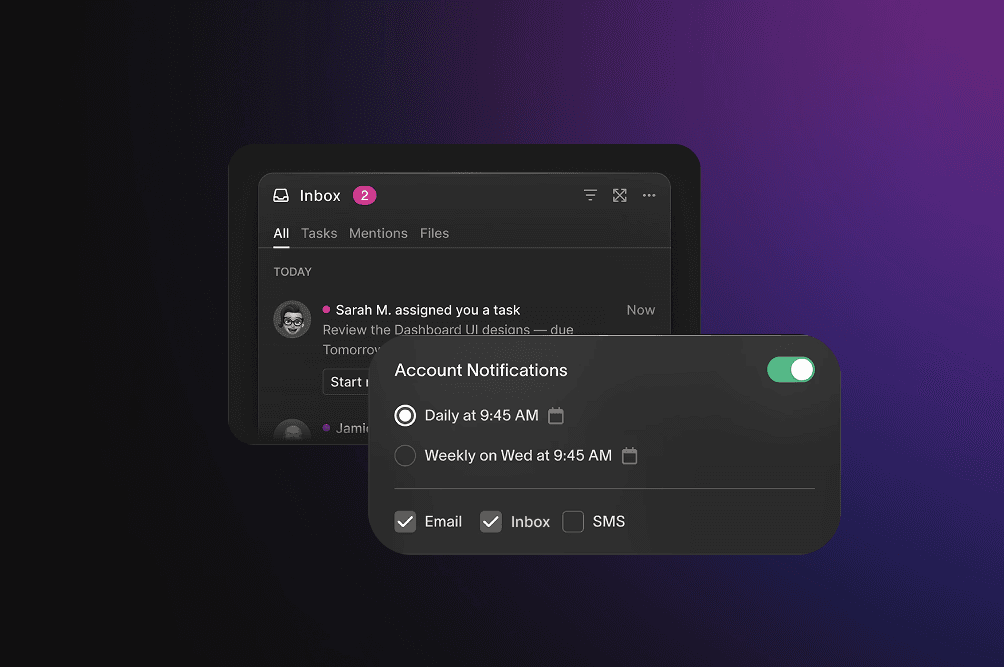
User-facing preference center. A place where users manage their own preferences, because STOP only captures "I don't want this anymore." It doesn't capture nuance.
The architectural difference:
Without orchestration:
Your App → Twilio (SMS opt-outs)
Your App → SendGrid (Email opt-outs)
Your App → Firebase (Push opt-outs)
[No connection between these]
With orchestration:
Your App → Orchestration Layer → Twilio, SendGrid, Firebase
                ↓
    [Unified preferences, enforced everywhere]
Build vs. Buy
Some teams build this themselves. It's a meaningful investment - not just the initial storage and API work, but the ongoing maintenance of keeping preference state synchronized across every notification path in your codebase. Every new channel you add needs to check the preference system. Every new notification type needs proper topic classification.
Others use a platform that handles this out of the box. Courier, for example, provides hosted preference centers with subscription topics, cross-channel enforcement, and audit logs. When a user opts out of a topic, that preference automatically applies to SMS, email, push, and chat - because the orchestration layer sits above all the individual providers.
The platform approach also simplifies provider management. You can use Twilio for SMS, Vonage as a backup, SendGrid for email, Firebase for push - the preference layer doesn't care which providers you're using underneath. It enforces user choices at the orchestration level.
If you're already using a CDP like Segment, you can pipe user data through to keep profiles in sync.
The Transactional vs. Marketing Distinction
Whether or not "revoke all" takes effect, distinguishing transactional from marketing messages matters more than it used to.
Current rules already require honoring opt-outs within 10 business days - but only for messages that require consent. Truly transactional messages (order confirmations, security alerts, legally required notices) don't require prior consent under the TCPA, so they're not subject to the same opt-out rules.
This means your notification system needs to know the difference. You can't just have a sendSMS() function that fires whatever you pass it. You need:
- A clear taxonomy of notification types
- Classification of each notification as transactional or marketing
- Logic that checks "does this message type require consent, and if so, has this user opted out?" before sending
The safest approach: let users set preferences per topic. "I want all transactional messages via SMS. I want marketing only via email. No push notifications for anything."
Then respect those preferences automatically, every time you send.
What This Means for Teams Evaluating SMS Solutions
If you're searching for a text messaging API - queries like "what is Twilio" or "Twilio vs Vonage" - here's the mental model:
Twilio, Vonage, MessageBird, Plivo are delivery infrastructure. They solve the hard problem of getting messages from your server to someone's phone via carrier networks. They handle carrier relationships, number provisioning, 10DLC registration, delivery receipts, and basic keyword responses. They're very good at this.
They are not preference management systems. They don't know about your other channels. They don't provide cross-channel opt-out enforcement. They don't give users a UI to manage what they receive.
If you're building a single-channel SMS system and nothing else, a text messaging API is all you need.
If you're building a product that communicates with users across multiple channels - and in 2026, most products do - you need something that coordinates across channels and maintains unified preference state.
Practical Recommendations
Right now:
- Make sure you're honoring the April 2025 rules: any reasonable opt-out method, 10 business day response time, no exclusive opt-out channels.
- Map out everywhere your app sends automated messages. Ask: "If someone opts out in one channel, do we have any mechanism to know about it in other channels?"
- Classify your notifications as transactional or marketing. Know which ones require consent.
Architecture decisions:
- If you're early stage with simple notification needs, your SMS API's built-in STOP handling might be enough for now.
- If you're sending notifications across multiple channels, evaluate whether you need an orchestration layer.
- If you're in a regulated industry (finance, healthcare), the complexity of cross-channel consent management usually justifies a platform approach over building custom.
Regulatory monitoring:
- Watch the FCC's rulemaking on the "revoke all" provision. Reply comments are due February 3, 2026. The rule could be modified, eliminated, or take effect as written in January 2027.
- Even if the rule gets eliminated, user expectations around preference management aren't going away. Building the right architecture now means you're ready either way.
The Bigger Picture
These rules are part of a longer trend. Users have more channels to ignore, more notifications competing for attention, and less patience for companies that don't respect their preferences.
The companies that win are the ones that treat preference management as a product feature, not a compliance checkbox. Let users control what they receive, how they receive it, and when. Respect those choices everywhere, automatically.
That's hard to do when your notification architecture is a patchwork of channel-specific APIs with no unifying layer. It's much easier when preferences live in one place and get enforced everywhere.
The regulatory landscape will keep shifting. User expectations won't. Build for the expectations.
Courier provides a unified layer for SMS, email, push, and chat - with built-in preference management that enforces user choices across every channel. It integrates with Twilio, Vonage, SendGrid, Firebase, and 50+ other providers. Start free or talk to the team about your notification architecture.
Frequently asked questions
How do I sync SMS opt-outs across email, push, and in-app channels?
SMS providers only track opt-outs within their own system. When someone texts STOP to Twilio, that doesn't propagate to SendGrid, Firebase, or your in-app messaging. You need either custom preference sync logic across every provider, or a notification orchestration platform like Courier that maintains unified preferences and enforces them automatically at send time across all channels.
What is the difference between TCPA and 10DLC?
TCPA is federal law governing consent and opt-out requirements for automated calls and texts. 10DLC is a carrier registration system for A2P messaging. Your SMS provider handles 10DLC registration. TCPA compliance, especially cross-channel preference management, is your responsibility. Platforms like Courier help by enforcing user preferences across SMS, email, push, and chat from a single system.
What does Twilio handle for TCPA compliance?
Twilio handles delivery infrastructure: 10DLC registration, carrier relationships, STOP keyword responses, and blocking messages to opted-out numbers. Twilio does not handle cross-channel preference sync, preference UI for users, audit trails for compliance disputes, or distinguishing transactional from marketing messages. Those require either custom development or a platform like Courier.
What is the FCC revoke all rule?
The revoke all rule would require businesses to treat any opt-out as applying to all future automated messages, not just the channel where it occurred. Originally scheduled for April 2025, it's been delayed to January 2027 and may be eliminated. Even without the mandate, cross-channel preference management improves user experience. Courier's preference center handles this automatically.
Similar resources

WhatsApp Business messages: types, templates, and rules
Every WhatsApp Business message is a template or a free-form message, and the type decides when you can send it and what it can look like. How businesses use each one, the template categories, the formats worth knowing, and the rules that stop messages from arriving.

WhatsApp pricing changes on October 1, 2026
On October 1, 2026, two things become billable on the WhatsApp Business Platform: free-form replies inside the 24-hour customer service window, and utility templates sent in response to a customer. If your WhatsApp volume is conversations rather than campaigns, this is not a rate tweak. It adds a line to your invoice where there used to be a zero. Here is what changes, a worked example of the cost, and what to check.

Clinical alert and notification systems: how escalation works
A clinical alert is easy to send and hard to close. This is how alerting works inside a hospital: where alerts come from, how routing by role and shift works, and how the acknowledge, timeout, escalate loop is actually built, including what happens when nobody answers.