Customer Journey Orchestration: A Developer's Guide
 Kyle SeylerMay 13, 2026
TL;DR:
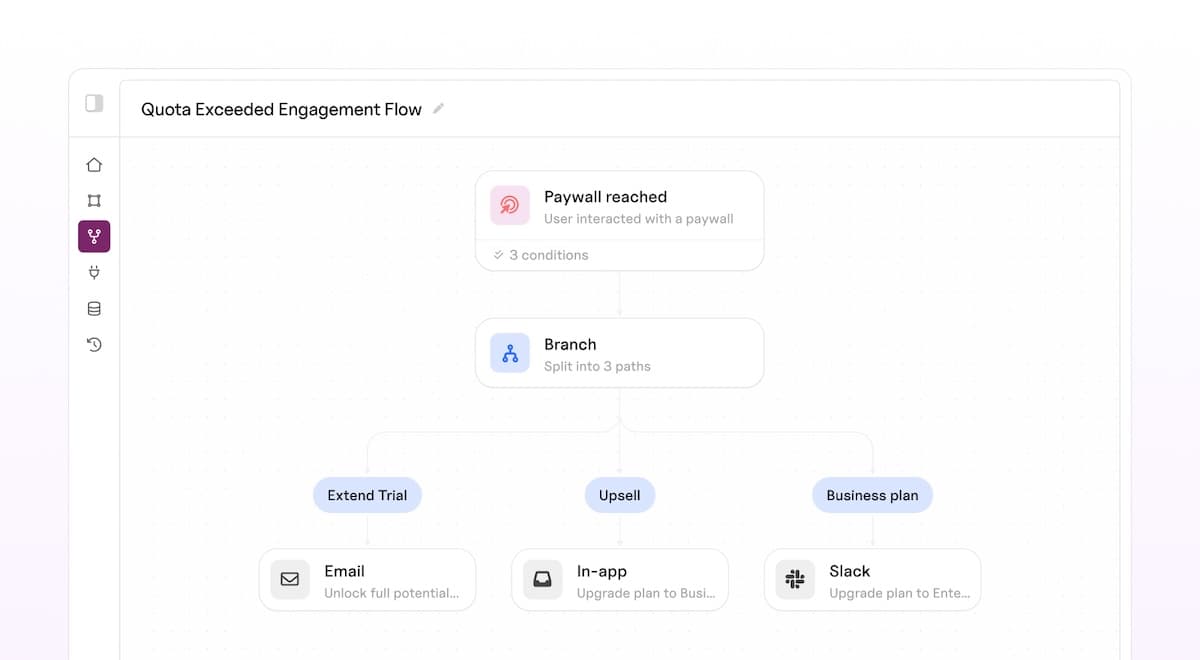
- Customer journey orchestration coordinates the triggers, branching, multichannel sends, and retries that move a user through a defined sequence (onboarding, dunning, escalation, re-engagement, agent-driven flows).
- The marketer-facing version lives inside CEPs like Customer.io and Braze. The developer-facing version exposes the same primitives as APIs, SDKs, and CLI so flows live in source control next to the product.
- Courier Journeys handles orchestration above your existing providers (Twilio, Resend, FCM, Slack). You define the journey; Courier handles delivery, failover, and observability. See the docs and quickstart to wire one up.
Customer journey orchestration is the practice of coordinating the messages a user receives across channels, in the right order, based on what they do or fail to do in your product. It sits above the providers that actually deliver messages (Twilio for SMS, Resend or SES for email, FCM for push) and decides who gets what, when, and through which channel. API-first orchestration exposes that decision layer as code rather than a marketing UI.
What is customer journey orchestration?
Customer journey orchestration is the layer that turns a product event (user signed up, payment failed, alert fired, deployment shipped) into a sequence of well-timed messages across the channels a user actually checks. A single trigger can fan out to email now, an SMS reminder in 24 hours if the email goes unread, and a Slack ping to an internal team if the user still hasn't acted by day three.
Three things distinguish orchestration from sending a single notification:
- State. The orchestrator remembers where each user is in the journey, so it can branch, wait, and recover from a missed step.
- Channel logic. It picks email, push, SMS, in-app, or chat based on user preferences, deliverability, and prior engagement instead of a hardcoded channel. The channels reference lists the providers Courier coordinates.
- Observability. Every step is logged with a timestamp, the chosen channel, the provider response, and the next scheduled action, so debugging a missed message takes minutes instead of hours.
Core capabilities of a journey orchestrator
Any orchestration product worth using has the same five primitives. The differences are in how you operate them: through a marketer UI, a developer API, or both.
- Triggers. Inbound webhooks, API calls, scheduled cron, audience entry, or a product event from a CDP. The trigger carries a payload, and the orchestrator binds it to a user profile.
- Branching and conditional logic. If the user opened the welcome email, skip the reminder. If not, wait 48 hours and try SMS.
- Multichannel send. A single send step that picks the best available channel based on user preferences and provider health, falling back automatically when a primary provider returns a hard failure. The multichannel notifications page walks through how the routing logic works.
- Delays, batching, throttling, and digest. Time-based waits, plus rate controls so a noisy product event doesn't blast a user with ten notifications in two minutes.
- Retries and dead-letter handling. If a provider returns a transient error, the orchestrator retries on a backoff. If it fails terminally, the event lands somewhere a developer can inspect.
Observability ties these together. A journey without logs is a journey you can't debug.
Customer journey orchestration vs marketing automation
The two get conflated because they both send messages based on user behavior. The audience, surface, and failure mode are different.
| Marketing automation | Customer journey orchestration | |
|---|---|---|
| Primary user | Marketer or lifecycle manager | Developer, PM, growth engineer |
| Primary surface | Visual builder inside a CEP | API, SDK, CLI, optional visual builder |
| Source of truth | The CEP's UI | Source control (or a UI synced to source control) |
| Triggers | Audience entry, CRM event, email click | Product events, webhooks, API calls, scheduled jobs |
| Typical channels | Email, SMS, push (campaign-shaped) | Email, SMS, push, in-app, Slack, Teams, webhook |
| Versioning | Tool-specific, often manual | Git, branches, code review |
| Best fit | Lifecycle campaigns, broadcast offers | Transactional flows, product alerts, agent outputs, mixed marketing + product |
Neither one is strictly better. Marketers running broadcast campaigns are well served by a CEP. Engineers wiring up payment-failure dunning, multi-step approval flows, or alert escalations want their journeys defined in code, reviewed in pull requests, and deployed with the rest of the application.
How API-first orchestration changes the workflow
In a UI-first orchestrator, a new journey is a meeting, a Figma file, and a marketer clicking through nodes. In an API-first orchestrator, a new journey is a TypeScript file in the same repo as the product.
A minimal trigger looks like a normal API call. Here's a payment-failure flow using Courier:
import { CourierClient } from "@trycourier/courier";const courier = new CourierClient({ authorizationToken: process.env.COURIER_AUTH_TOKEN });await courier.send({message: {to: { user_id: "user_28af3" },template: "payment-failed-dunning",data: {invoice_id: "in_19fr",amount_due: 4900,grace_period_ends: "2026-06-02"}}});
The template payment-failed-dunning is a journey: send email immediately, wait 48 hours, send SMS if the invoice is still unpaid, escalate to a Slack channel after day five. The application code that handles the failed payment doesn't care about any of that. It calls send with a payload, and the orchestrator owns the sequence. Compare the underlying delivery options in best email API providers for developers and the broader transactional email services breakdown.
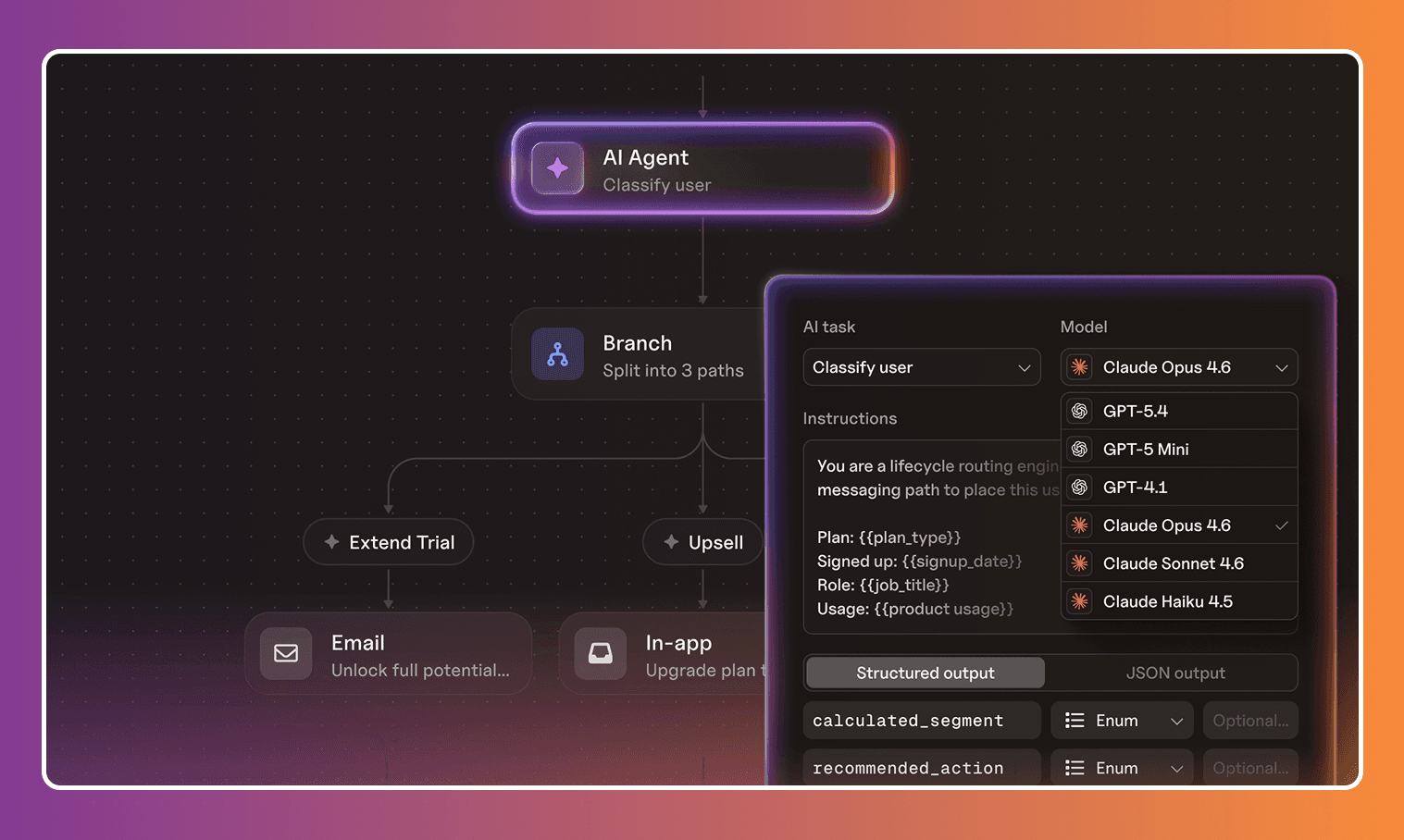
For a journey with branching that depends on runtime state, Courier exposes a Journeys API where each step (send, delay, branch, cancel) is a first-class node you can invoke or mutate:
from courier.client import Couriercourier = Courier(authorization_token=COURIER_AUTH_TOKEN)courier.automations.invoke_ad_hoc_automation(data={"automation": {"steps": [{"action": "send", "template": "abandoned-checkout-1"},{"action": "delay", "duration": "24 hours"},{"action": "send", "template": "abandoned-checkout-2"}]},"profile": {"user_id": "user_19c"},"data": {"cart_id": "c_551"}})
Journey changes go through code review, deploy with the application, and roll back the same way as any other commit. There is no separate environment to keep in sync.
Try Courier Journeys free. Build multichannel journeys with the API-first orchestration layer. Create a free developer account.
Common journey patterns
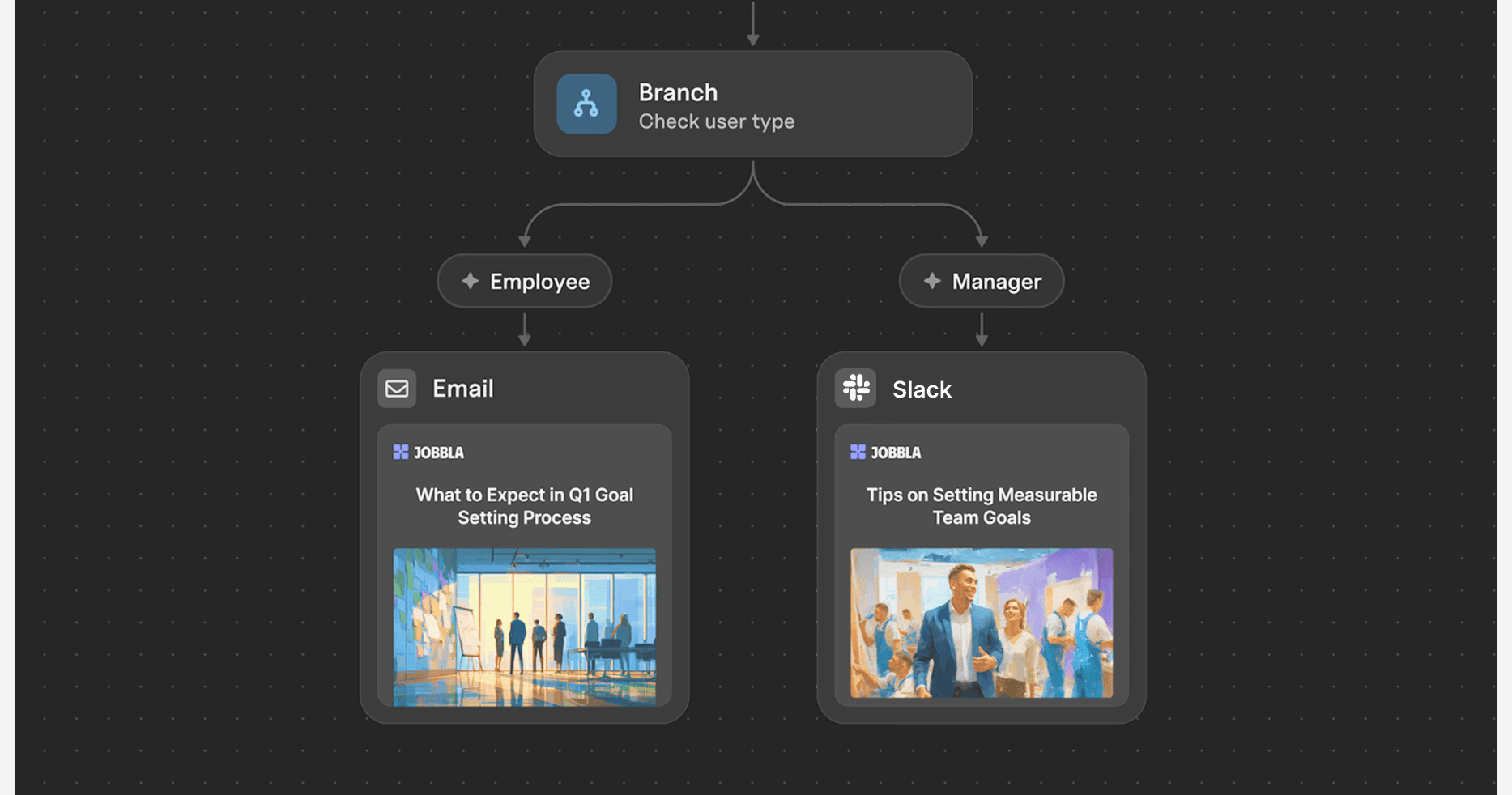
A handful of patterns show up across nearly every product, regardless of vertical.
- Onboarding sequence. Welcome email on signup, in-app tooltips on first session, day-three nudge if the user hasn't completed a key action, day-seven check-in. Branch on whether the user has reached activation. Pair with Courier Inbox when you want the in-app side of the sequence to live next to the email and SMS.
- Transactional alert with follow-up. Send a real-time confirmation (order placed, password changed, deploy succeeded), then wait for an acknowledgement. If none arrives, follow up on a second channel.
- Payment dunning. Card declined event triggers an email, then SMS at 48 hours, then in-app banner at 72, then a Slack alert to customer success at day five. Cancel the entire journey on successful payment.
- Multi-step approval. A pull request, expense report, or contract triggers sequential approver notifications with timeouts and escalations.
- Re-engagement. A churn-risk score crosses a threshold and kicks off a sequence that varies by segment: free users get one nudge, paying users get a manual outreach task assigned to a CSM.
- Agent-driven notifications. An AI agent finishes a task and needs to tell the user. Without orchestration, the agent fires every notification immediately. With orchestration, it hands the events off and the journey applies batching, digesting, and throttling.
The pattern isn't the interesting part. All of these collapse to the same set of primitives (trigger, wait, branch, send, cancel), which is why a single orchestration layer can own them.
How to measure journey performance
Customer journey tracking is the data side of the same problem. The orchestrator emits events at every step; useful measurement means turning those events into answers to four questions:
- Did each step deliver? Per-step delivery rate by channel and provider. A welcome email at 98% delivery is fine; at 84% something is wrong.
- Did each step convert? Open, click, in-app view, primary CTA conversion. A journey that delivers perfectly but converts at 2% is a content problem, not an infrastructure problem.
- Where did users exit? A funnel view of each step in the journey shows where users complete the desired action vs drop off. The biggest cliff is usually the most valuable thing to fix.
- Are users opting out? Unsubscribe and preference-center changes by journey. A spike means the journey is over-sending and burning the channel. A preference center gives users the per-channel and per-topic controls that keep opt-outs surgical instead of total.
Customer journey optimization is what you do with those four answers: shorten a delay that's losing users, swap a channel where deliverability is poor, cap frequency where unsubscribes spike. The orchestrator's logs make the change auditable; the metrics make it justifiable.
For most teams, journey-level analytics live in three places: the orchestration product's own logs (per-message debugging), a warehouse (long-term cohort analysis), and a product analytics tool (funnel and conversion). Courier emits structured events to all three.
Choosing the right orchestration approach
Three paths, depending on who owns the journey and what good looks like for the team.
- Roll your own. Cron jobs, a queue, and per-provider SDKs. Cheap to start, expensive to maintain once a second channel shows up. Defensible only if notifications are a true product moat.
- Customer engagement platform (CEP). Customer.io, Braze, Iterable. Strong for marketing-led teams that live in the CEP's UI. Less natural for transactional flows owned by engineering, and integration with product events typically routes through a CDP.
- Developer-first orchestration. Courier and similar API-first platforms. Journeys defined in code, BYOP across existing providers, single observability layer. Fits teams whose notifications are a mix of transactional, product, and lifecycle, and where engineering owns the contract. See Courier pricing for the cost side of the comparison.
If the team is engineering-led, the journey involves product events more than marketing campaigns, and the existing provider stack (Twilio, Resend, SES, FCM, Slack) should stay in place, an API-first orchestrator like Courier Journeys is the closer match. If everything is marketing-led broadcast and the team lives inside a CEP, the CEP probably already does enough.
For a deeper comparison of specific products, see the customer journey orchestration tools comparison. For the underlying delivery layer, multichannel notifications explains the channels Courier coordinates.
FAQ
See the structured FAQ section above. For a quick reference:
- What is customer journey orchestration? The layer that coordinates triggers, branching, multichannel sends, and retries to move a user through a sequence based on product events and behavior.
- How is orchestration different from customer journey mapping? Mapping is the diagram. Orchestration is the system that executes against it.
- Is journey orchestration just marketing automation? No. They overlap, but orchestration covers transactional and product notifications too, and an API-first orchestrator lives in source control rather than a marketing UI.
- What are the best customer journey orchestration tools? Tools range from marketer-focused CEPs (Customer.io, Braze, Iterable) to developer-focused platforms like Courier. The orchestration tools comparison has a full breakdown.
- Do I need a CDP for journey orchestration? Not necessarily. A CDP helps if user data is scattered across many systems. For most product teams, the orchestrator can read directly from the application and the user profile store.
- Can I keep my current providers (Twilio, Resend, FCM)? Yes, with a BYOP orchestrator like Courier. The orchestration layer sits above your providers; they continue to handle delivery.
- How does orchestration work for AI agents? Agents emit events to the orchestrator, which applies batching, throttling, and digest logic before sending, so agent activity doesn't overwhelm the user.
Similar resources

Courier vs Customer.io: 2026 messaging platform comparison
Courier and Customer.io both send across email, push, SMS, and in-app, but they are not priced or built the same way. Courier bills by the send, puts journeys, experiments, broadcasts, an in-app inbox, preferences, and 50+ delivery providers on one platform, and exposes all of it through an API, a CLI, and an MCP server. Customer.io bills by the number of profiles in your database and fits a marketing team that needs deep behavioral segmentation. This comparison covers pricing, journeys, channels, in-app messaging, localization, and preferences, with every competitor figure linked to Customer.io's own pages.
Your notification analytics are now available by API
If it's in the Courier dashboard, it's on the API. Analytics was one of the last screens where that wasn't true. GET /notifications/{id}/metrics returns sends, deliveries, opens, clicks, errors, and undeliverable counts per template as a time series, broken out by provider and channel, so the numbers can live in your own product or go straight to an agent.
Top 11 push notification platforms compared for 2026
Push starts as the whole job, then product wants an email fallback, legal wants a preference center, and support wants a searchable log. This guide compares 11 push notification platforms on channels, free tiers, and pricing, and shows why Courier's single API for push, email, SMS, in-app inbox, Slack, and Microsoft Teams fits that arc better than a push-only tool. Includes 2026 opt-in and open-rate benchmarks, a full-stack cost comparison, and what each platform leaves you to build.